To see or not see … a doctor

(Written sitting in a doctor’s waiting room)


The question looks absurd. When do you go to  a doctor ? Whenever you have some medical problem ; it does sound obvious.

Reality is something different. Many of us would have heard stories as how ‘so and so’ neglected a problem and let it aggravate so much that it has resulted in some permanent damage or worse.

Have you come across stories of how going to a doctor or a hospital has caused irredeemable damage to one’s health as well as to the bank balance? Not very often .

How many people are going about with stents when they don’t really  need them ? How many people have overpaid the hospitals for necessary treatment and not so necessary treatment? We will never know. How many of us have been worrying sick about some disease that we never had ?

In an ideal world, when a medical problem crops up , be it  a fever or a fracture; you go to the appropriate specialist and he makes a quick and  accurate diagnosis and fixes it.

But it is never an ideal world. Say, you see some rashes on your skin; first you ignore it and when it starts itching too much , you go for an OTC ointment. Instead of getting better ,it might get worse.

You then see decide to see a doctor. Well, it could be a fungal infection or a symptom for any underlying condition like diabetes. The blood tests start. The complete blood count might throw up other issues.

Then you see a dermatologist as well who would focus on his area of specialization.

After months or even years of going about blood tests and experimenting with diets (allergens) one is still not sure of the cause for the rashes. I am aware of a case where the reason for a chronic skin problem was finally traced to a tooth decay; yes, once the bad tooth was extracted, everything was hunky-dory .

If you are lucky , you find the problem or else you keep going to every specialist, go through a battery of tests, undergo many experiments on medicines , diets and life style changes  all the while paying your way through every experiment . The mental stress one goes through , sitting in doctors ‘  waiting rooms is something not quantifiable.

It is under these circumstances that one has think ten times before seeing the first doctor, as once you get into the conveyor belt, it’s difficult to come out ,half-way. It’s like Hotel California ; you can check in but not check out.

All these problems can occur when the doctors and hospitals are very well meaning.

Again we are living in anything but an ideal world. Hospitals are run with profit motive and every expensive equipment has to earn it’s cost from the patients. The insurance company , that you have thoughtfully bought medical insurance  from has to cut costs by finding loopholes in your claim.

You can’t change the external world. Only thing you have some degree of control is over your own actions.

So, from the miracle of modern medicines we are back to basics ; regular exercises, moderate diet, good sleep and good air and water. Not surprisingly most doctors give this piece of advice for free, along with their expensive prescriptions.

Dhoop ,paani, mithi, hawa;
Kayi rogon ka yahi dawa.

Sunshine,Water,Earth, Air
The ultimate remedy to many an ailment.


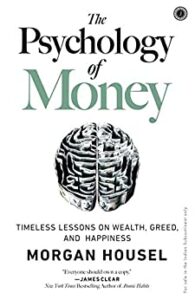
The Psychology of Money

The Psychology of Money by Morgan Housel 

This a book  much talked about and much reviewed and I don’t intend an attempt to evaluate the contents. The idea behind this post is just to record the impressions it cast on my mind.

There are many popular books on investments or how to get rich or how to succeed in a business. This is definitely not in that genre. There is no magic wand to get rich and more importantly there is no need for one

In my mind, money , or lack of money , is something that affects every facet of your life. Ideally, one should not be , forever engaged in making money or in guarding your wealth, and yet when the need arises there should be enough to meet that need comfortably.

If this be the aim, it does not necessarily mean making tonnes and tonnes of money. Mahatma Gandhi , once he switched to the Ashram mode of living, around 1904, never owned any wealth. Yet what a great fund raiser he proved to be!

Well, that’s for Mahatma; a common man has to understand enough about earnings, savings, investments, insurance and taxes to attain ‘Financial Nirwana’.

Yes , that’s what I call it; ‘Financial Nirwana‘ to organise your financial affairs in such a way that you get what you want ,when you want and yet do not have to take so much risk causing you to lose sleep over it or allow it to rob you of the precious time that you would rather spend with your family or in activities close to your heart.

The book covers the behavioral aspects related to earning, spending and investing. While these are activities related to external environment, there is more to consider on internal factors. What drives your behaviour is the ideas you value; the idea of freedom, contentment and happiness.

Aparigraha (non possession) is considered a great virtue in ancient Indian philosophy. Does it mean renouncing all wealth? Mahatma Gandhi interpreted the idea to mean holding the wealth as a trustee rather than an owner.

In this book , the author tries to differentiate between need and greed. He suggests that, big cars, big house or rich life style are acquired at a great cost only to impress others, quite unsuccessfully at that, and a decent house, decent car and a decent lifestyle are what one really needs. Of course ,the word ‘decent ‘ could have an elastic interpretation to mean anything in the range  from a 2BHK (Two bedroom house)  to a penthouse.

The book is organized into 20 chapters; eighteen of them on simple ideas leading to financial Nirwana, 19th is a summary and the 20th covering his own course in life.

There is nothing really new or earth-shattering revelations. Most of the issues are known to most people but seldom followed in real life. The book starts with the idea that, on hindsight, it may appear that many people have made crazy financial decisions. In reality, when seen from the point of view of these individuals, every decision had been backed by reasoning prompted by the situation they were in. The author says Finance should be taught from psychology point of view rather than as a technical subject.

There is a lot of anecdotes covering the aspects of savings, effect of compounding, need for a caution and so on.

The book also talks of the need for contentment. This sounds so unamerican ; the idea that one should limit his wants (not needs) . But that is where the idea of balance comes in . If you go on blindly chasing wealth , you miss out everything that wealth can give you including the most important thing, Freedom.

“THE HIGHEST FORM of wealth is the ability to wake up every morning and say, “I can do whatever I want today.”

The book touches on the relation between money and the degree of  happiness it can bring .

Virtues of moderation is highlighted.

Aiming, at every point in your working life, to have moderate annual savings, moderate free time, no more than a moderate commute, and at least moderate time with your family, increases the odds of being able to stick with a plan and avoid regret than if any one of those things fall to the extreme sides of the spectrum.

I am so tempted to quote from the book extensively , and if I give in to that temptation, I am afraid ,I’ll end up copy pasting  half the book.

Here are my notes on the book ,for someone interested in details.

A point to note is that modern trends in  world of personal finance (to include Equities, insurance, retirement plans )  is still something new for most of us.

As social system is changing , all we have to support us whether during active working life or in post retirement life is just our  ‘financial prudence‘.

A must read book for all.


Book Review : Man The Unknown

Alexis Carrel 28 June 1873 – 5 November 1944) was a French surgeon and biologist who was awarded the Nobel Prize in Physiology or Medicine in 1912 for pioneering vascular suturing techniques. He invented the first perfusion pump with Charles A. Lindbergh opening the way to organ transplantation. 


This book man the unknown was one of the five books Dr APJ Abdul Kalam always kept at hand. 

When men and women of science focus their attention on humanity as a whole instead of restricting themselves to their narrow fields of expertise  the outcome is absolutely illuminating, educative and at times shocking !

The book is of just 300 pages and any attempt to summarise it wouldn’t do justice. I have  quoted certain parts verbatim to give a very brief indication of what the book is about . I am afraid , the review may not make much sense till one gets hold of the book and at least skim over the pages. The book is definitely worth not just skimming over but reading and re reading even if one does not agree with everything the author has to say.

The book is organized into eight chapters.

The introduction says 

THIS BOOK is having the paradoxical destiny of becoming more timely while it grows older.

Today, the way our social media is playing havoc with our lives driving people to violence or depression, the book is more relevant now after almost a century after its first publication.

The first chapter deals with how human civilization (mostly the western civilization) focused more on the study of inane objects mostly because it was possible to measure , weigh and experiment. We lack knowledge of ourselves due to the complexity and the inherent difficulty in studying empirically. 

The second and third chapters cover briefly the human body and physiological activities. These chapters are written as how a scientist would explain complex subjects  to a lay man.

The fourth chapter is on mental activities. Here two issues are highlighted; firstly that mind and matter cannot be studied separately and secondly that moral sense is far more important than intelligence. Doesn’t sound very scientific ?!

The fifth chapter discusses the process of ageing. But the author goes beyond solar time and analyses chronological age along with physiological and psychological age.

Sixth chapter is about adaptive functions. It talks of how a human being adapts and changes physiologically and psychologically to challenges from the environment. I wonder if anyone is studying this aspect in the light of the challenges humankind is facing from the current pandemic.

The seventh chapter is about individuality of each human being. There are many politically incorrect statements on the concept of equality . Each individual is unique and he or she should be treated as such whether from the point of view of employability or health-care or for rights and responsibilities.

The last and the most important chapter is titled “Remaking of Man”. Here, the author gives out definite steps to create a society of individuals free from the the clutches of blind technology and grasp the complexities and wealth of our own nature.  

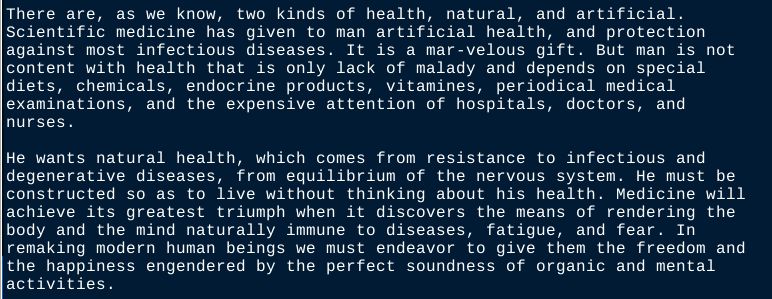
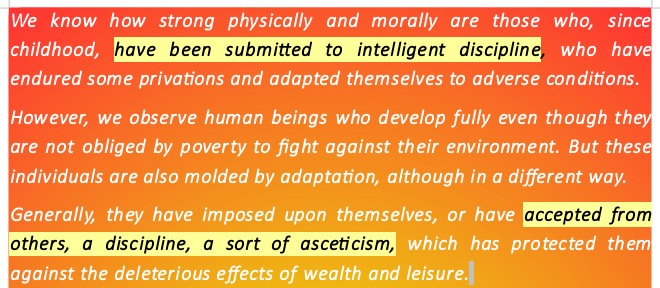
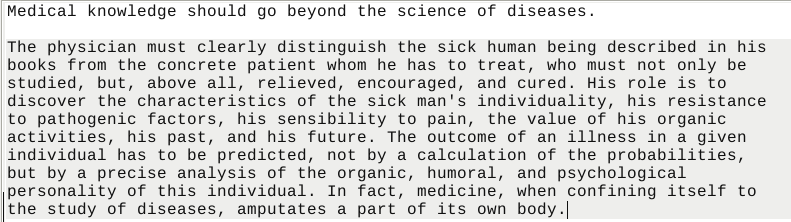
I give below some of the powerful words from the book that indicates the author’s line of reasoning.

A book definitely worth reading.


Native Wisdom

From Jat Regiment Journal 1995, Bicentenary Issue.

Continuing my rant on alternative system of medicines from  here. 


I am not against allopathy but as our society gets more and more dependent on specialists , I feel we are losing sight of common sense approach to any issue, particularly health issues. 

This write up of mine was first published in Jat Veer 1995, Bicentenary issue of the Regimental Magazine . At that time I was only looking at the way our troops , the Jats, approached certain healthcare problems. Today, I feel we have rich knowledge base  of traditional systems of health care in every part of our country . Our life style today, has led to over-dependence on specialists . Traditional sources of  knowledge are being dismissed as  superstitions and quackery. I think we need to take a re-look at common sense approach to health care.


 It happened in Pithoragarh circa 1993. My constitution, particularly my extra-sensitive digestive system, has never been my strong point. But what happened to me recently (written in circa 1994) was something really abnormal. It all started around midnight and the rest of the night was punctuated by regular trips to the loo and back. Not unused to such a state I took it in my stride . Next morning, on consulting my better half, and after going through a number of possible reasons for the catastrophe, we decided on a plan of action. We believed that any organism heals itself if allowed to. If output is bad , the input should be examined, we reasoned. So it was decided that I would live on only salt and water (ORF) till I got okay. It suited my wife as well, as it was a day of fasting for her. 

Now, came the deviation from the familiar pattern of a self limiting problem. Every glass of water found its way out in record time. It was as if the entire alimentary canal was one straight tube. So, the doctor enters the scene. 

All he could do was to prescribe a heavy dose of some anti-diarrhoeal medicines and give me a ‘Sick in Quarters’ sentence that exempted me from going to office. 

Then we started on our home remedies. A pitcher full of buttermilk with a liberal dose of Asafoetida , ( hing) was made and I was to take a glassful every half an hour or so. 

In India everyone is a doctor and he or she knows exactly what is to be done . The maid servant arrived and gave her own  recipe for cure. I don’t remember what it was but fortunately for me, it was promptly ruled out by my wife.

My fauji helper then confided to me that , despite a well equipped military hospital in the cantonment, all our men depended on a particular sepoy to cure any stomach ailment. This gentlemen , I was told was ustad (expert) in settling the ‘nerves’. Here I must say , the troops were jats and their stomachs  were particularly sensitive to the quality of drinking water. The problem as spelt out by jats  is sort of untranslatable. It was  colloquially described as ‘dharn dig gaya’ . It could be loosely described as a nerve centre shifting a bit from its precise location .

Mind you ,we were educated and hence very skeptical . But then we were always open to new ideas like resetting a nerve to cure diarrhoea ! 

Enter Lance Naik Ranbir……

A rug was spread on the floor and I had to lie down for examination. So, with a bellyful of medicines and buttermilk with asaphotida , I surrendered myself to the ministrations of Lance naik. He tentatively put a hand on my naval and started probing; with a sudden pressure , he evinced a sharp cry from me at one spot. Now fully convinced of the cause of the problem, he proceeded with the treatment. I was placed belly down with a tightly folded cloth under my naval. Then , deliberately he went on to  pluck the flesh on the back of the thighs on each leg , and  then  he declared I was okay. No, not yet, I was to consume some ‘mithi cheez’ (something sweet) preferably halwa to ensure that the nerve center stayed in place. This was a little too much even for our wide open minds. Anyway, after a little hesitation he agreed that lassi without the hing would do. 

Presto! I became okay. No More discomfort in the stomach and no more trips to the loo. Only thing ; my skeptic mind was quite shaken up by the entire episode. What had caused the problem and how was it cured ? 

The question prompted me to find out about other native remedies. One interesting fact was that sciatica ,called rangar among our troops, was often treated  with a great degree of success, by ‘clearing certain veins in the legs of bad blood’ .

Why don’t the scientifically trained doctors recognize other methods for cure , particularly when they themselves were clueless and were only experimenting, trying out various approaches?

With this incident , I was reminded of what our one year old son had gone  through. It was also so similar . We had gone to a pediatrician and had tried out various medicines and when nothing worked , the doctor  had prescribed a change of diet  to horrible smelling soya bean milk powder from the regular milk powder. Finally it was an old woman, a maid servant, who offered to provide a cure in her desi way. As we had been through so much of ‘scientific’ treatments with no results, we readily agreed. She said the intestines had got  entangled and with gentle patting on the stomach , brought it to normal position. All was okay. This possibility never occurred to the pediatrician ! 

Whatever, I do not say that home remedy is the best solution, but would love to hear our doctors, when they don’t know something , simply  say “We are clueless of the cause or remedies “ instead of using words like ‘idiopathic ‘ or ‘prophylactic treatment ‘ to carry on with  their ‘scientific’ experiments. 

I also wish they look at some of the home remedies with an open mind. We are losing our common sense approach to ailments. At this rate , some day, to stop hiccups , we would be running to doctors and specialists instead of looking for a glass of water.

The Password Bunker

Your life is more digital than ever!  Your identity is indicated by a set of numbers and letters everywhere and each platform or organization identifies you by a different customer number/ account number / email id  or mobile number. The best of the face recognition softwares is not half as good as the friendly neighbour-hood banker or the grocer .

You need to identify yourself to your banker / trader / govt agent or to a dumb system ,at all times through a simple set of username and passwords. I wonder if there is anyone reading this who has not been affected by password issues.

As a teacher, it could have been a question paper or a result sheet that you had been locked out of, resulting in doing it all over again.

As a corporate worker you might have locked some tender related documents and forgotten the key.

It could have been your online banking account that got disabled after three unsuccessful tries . Of late it is the cryptocurrency making news as people lose millions of dollars for forgetting their passwords. A heavy price indeed.

Youngsters have already reconciled to the idea of a passwords controlled digital life be it work or leisure.

Some people of my age, sixty plus, think they can run away from these problems. I am also learning how some are successfully keeping themselves away from the complexities of the binary world. To them , all I can say is that by avoiding technology, they are also depriving themselves of the benefits that digital life brings. Anyway, to each his/ her own.

What prompted me to write the post was a rather tragic set of events. A friend who had passed away, had left all his financial dealings recorded in an excel spreadsheet and had locked it right and proper with passwords. Now even after an year , the family members are unable to access the contents. Then there was another who , probably, did not maintain a record of his dealings and the family members came to know of a transaction only when an affected party told them. Under such circumstances , obviously any money owed to the diseased will be forgotten gleefully  and any money that he owed will be recovered from his kin.

There are also cases where someone has maintained his financial records including passwords very meticulously and the same  falling into wrong hands , leading to a catastrophic effect. A stolen smartphone or a laptop can lead to a financial ruin.

So, on one hand, one needs to maintain a record of all important information including passwords and the same has to be kept protected from fraudsters. On the other hand the information has to be readily available to him  or his next of kin after he is gone.

It is actually not just about passwords, but also about making a place to simply store all the other information for each account – account numbers, phone, expiration dates, even listings that have almost nothing to do with the Web.

Googling over the issue of how best information database can be built and  maintained , I came across this book “Password Bunker” by Paula Capstan. 

Essentially it says , store the details systematically on an Excel Sheet and password protect that sheet.

The idea has been expanded to a complete book of 140 pages. It costs Rs 813/- for a paperback and free for kindle-unlimited subscribers. 

It is an ELI5  book. For the not so young, ELI5 , on the net, stands for Explain Like I am 5. It starts with instructions like click means click the mouse once and double-click means click it twice in quick succession.

There are also many useful insights into how a novice makes up his passwords and how hackers exploit this knowledge. There are lots of practical tips on how to keep the information available and yet keep it safe from prying eyes. One such tip says,” take print outs for short journeys , but keep the username and password on separate sheets. password is of no use without the knowledge of username. That’s why in the Linux world, an username is considered as confidential as the password.

If your password is blue1234 , store it as b4321 and decode it again when you want to use. Bottom-line is that everyone has to find his own method to remember the password, may be  with a small hint noted  down; but something better than asking your spouse ,”hey, what’s my password?” 

As I see it, the book is not worth buying for 813/- but definitely worth going through if you are a subscriber to kindle unlimited. Whatever, the idea of storing information of personal identities on the web , securely , is worth pondering over.

So much for use of a spreadsheet for keeping a record of important information. 

I ran a survey on a telegram group of my age group and the results are as shown.

As can be seen only one vote for an electronic spreadsheet and almost 50% for maintaining a physical diary or note book.

To my pleasant surprise , on Amazon ,I just saw the kind of customized notebooks for the pen and note book types.. 


Discrete password journal lets you store your important internet passwords in one convenient place!

Measuring at 6″ x 9″ (15.24 x 22.86 cm), this password keeper has spaces to record the website name, username, password, and notes
Stop writing your passwords down on sticky notes everywhere
Premium matte-finish cover design
Password Keeper with more than 100 pages

I like it ! A password keeper with more than 100 pages ! The times we live in !


Real image and the Virtual Image

Whether we admit or not, these days , our behaviour is very much influenced by the Social media. from ‘chaar log kyaa kahenge’ (what would four people say) to ‘ chaalis log kyaa kahenge’ (what would 40 people say). Coincidentally , across culture , people are always worried about the ‘four people’ who need to approve their behaviour at all times. Why four and why not three or five? I am digressing right at the beginning; need to go on.

At the end of the day, we have spoken , ‘chatted’ or fought, more with our friends, ‘frenemies’  and virtual acquaintances and  of course a great many  total strangers than to real people in our everyday life. We have deliberately projected our virtual image to more people publicly , which may or may not be in line with our real personalities. Americans are cool; they have nicely adapted our word Avatar to indicate one of the many images of a being. My Twitter, FB and Telegram Avatars are so different, some one who has known me only through SM would think they are different people.

It starts with the DP or Profile picture ,that is generally natty or cool as compared to the grumpy you that your spouse sees every day, every moment, even as you are busy posting those ROFL emojis. 

Physical appearance taken care of, the next issue is the projection of the mental ‘you’ ; someone cool, liberal, generous, fun loving, witty etc etc.  

Everyone wants to be projected as witty. Most people forward jokes and funny videos to achieve that. It’s not easy to create contents particularly graphics. Since nobody knows who had made the original content, here it is important to be quick on the trigger. 

A little digression here about humour as such.

To think of it , humour is much more than just reading a joke, even less forwarding one. It is the way one is able to laugh at oneself, see the funny side in ordinary activities in day to day life. I remember reading ‘Uncle Podger hangs a picture ‘ from Three men in a boat. Just an ordinary act of fixing a nail and hanging a picture by a senile old man is narrated so wittily. Whenever , I am on   DIY  mode , the thought of Uncle Podger does bring a smile .

Anything can be laughed at, no sacred cows there. Swami Vivekananda , it seems , used to mimic Ramakrisna Parmahams going into Samadhi , done with such exaggerated comic effect,  sending his guru bhais into peels of laughter. I think in these corona times it would be great to be able to see the funny side of anything.

Coming back to SM, we’ll continue to interact with many avatars of many people including many of total strangers on twitter, FB, Instagram, and what have you. Some people who have been very close to one another have ceased to be on talking terms over some tiff on some virtual platform. Total strangers , who are know to each other only by their DP or avatars have got so close that they eagerly look forward to their ‘likes’ ‘follow’, ‘retweet’ etc. The number of ‘likes’ are also closely watched sending up or down , the Serotonin or Dopamine levels from moment to moment.

I am yet to see a ‘challenge ‘ like ‘nirvana from SM Challenge’ , for obvious reasons that even if you win that challenge where will you announce it and take a bow.

We cannot wish away WhatsApp and Facebook . Why not look at it as one more interesting dimension of real human behavior in a ‘virtual society ‘ ? Why not  choose to be amused  than be annoyed ! 


My tryst with Asthma

Cont from previous post.  

It was the year 1990, after spending 30 years of my life ,going through all kinds of rigorous physical activities, one fine day , I suddenly found myself gasping for breath after 5 minutes of jogging.

Like a good soldier , I reported to the military hospital in the town. Military hospitals , unlike civil hospitals are very liberal about admissions. I was straight away taken in as an in-patient. After some routine blood tests and x-rays , and observation for about a week, the medical specialist gave the diagnosis as ” acute bronchial asthma”

A point here is that in Army, downgrading medical category is much easier than providing treatment to underlying medical problems. That is one reason you will find many soldiers ‘golfing fit’ and ‘ cocktail worthy’ but not fighting fit. To be declared fighting fit , one has to be fit not just for routine  activities, but fit enough for abuse of the body under all kinds of weather and terrain including a stint at Siachin .

Coming back to my story , I was declared unfit for combat . This kind of down-gradation also meant that I was unfit for doing any training courses and for any promotions. More than anything, I could not attend the much sought after Defence service Staff Course, that I had been nominated for after going through a tough selection process. 

That’s the time I realized that Allopathy has no ‘cure’ for Asthma . The physician who treated me was liberal enough to let me go without an immediate official down-gradation, giving me a chance to cure myself by means other than allopathy.

In those  non-internet days ,whatsapp like stories traveled by word of mouth. Soon I came to be aware of all kinds of weird treatments for asthma. The vegetarian solutions involved different kinds of grass and herbs being ground to a paste and consumed and the non-vegetarian ones went to the extreme of swallowing a fish alive. It was surprising that in one month I came to know so much about asthma than in my entire life. 

I also built up my asthma library to moderate the Whatsapp like stories. (I still have those books) I tried some herbs and exercises but no fish for me please ,cooked or alive. Then someone told me about a place where such ‘incurable’ diseases were cured through yoga exercises.

I had a brief  leave period at Madras, before heading for Wellington, which incidentally enjoys the kind of salubrious climate that is anathema for asthma patients. I headed for Krishnamachari Yogamandiram at Mylapore, run by Shri Kesavachari, son of Shri Krishnamachari ( who was the Guru for both  his son and his younger brother  who is now globally well-known as BKS Iyengar).

Here one must note that Indian systems like Ayurveda or Yoga treat each body as unique and prescribes such treatment that would benefit that person . There is no general remedies like Aspirin for headache or Gelusil for Acidity.

Shri Krishnamachari examined me and prescribed a few breathing exercises. He was not happy that I was available only for two to three sessions to learn the exercises. All the same, he advised me to learn them properly and follow the routine religiously. When I asked him as to the how long will it take to see some results, he, like a mystic , was totally non-committal. He said, “Have faith and just follow the routine”. There was no ‘dosage’.

Not very scientific sounding; obviously there has been no empirical study on the effect of this treatment on a cross section of patients.

I still preserve that original prescription.

So started the regime. It involved getting at five in the morning and doing    the exercises , on empty stomach, that took about forty minutes to complete. Then I had to wait for half an hour before the first intake of any food or drink for the day. 

At Wellington (Ooty), we had a very hectic routine and it was not very pleasant to follow this routine 24×7. Nevertheless, I kept at it . In the beginning ,breathlessness occurred on any light physical exertion like jogging ; but gradually there was improvement and I could play tennis for short periods. I always had asthelin and deriphylin in my wallet, the must have medicines for an asthmatic. I used the medicines very very sparingly, and avoided the inhaler altogether. By the end of the year I could complete a five KM run , a mandatory test, with just only one asthalin tablet . I had come a long way on the path to recovery.

Subsequently, I stopped the exercises, but whenever I had to patrol in the mountainous areas, I went to back to the morning routine . 

Later I had been posted to high altitude areas and have patrolled at 17000 feet, without serious impediments; though I did have  some problems going over steep ascents with heavy loads. In one such situation, what helped me was not my tablets but pure mountain honey ,(eaten with the honeycomb), offered by a Bakarwal (shepherds of Pir Panjal Ranges).

What’s the conclusion ?

             Had I closed my mind to everything other than allopathy, it is without doubt that I would have left active soldiering in 1990, and would still be keeping an inhaler at hand and accepting the situation as unavoidable.

           Allopathic drugs like Asthelin and Deriphylin definitely helped as short term emergency remedies along with availability of oxygen therapy if and when required. But I did not have to go beyond an odd tablet during a bout of breathlessness. 

           Today, if I face a medical emergency would I look only to ayurveda and Yoga ? Not necessarily, particularly for immediate relief. But for any long term effect, I would definitely explore all  systems for healthy living. 

A point to note is that Pathanjali’s Ashtanga Yoga starts with yama and niyama or in simple words Dos and Donts . Many diseases can be prevented or controlled by only these yama and niyama before going on to pranayama and yogasan.

These Dos and Donts that run opposite of what is considered good living are not very popular, understandably.

But the way I look at it , today, I can do anything or abstain from anything just to avoid swallowing some chemicals to achieve a short term or immediate relief. 

The western system analyses and treats diseases. Our indian system studies health to arrive at Dos and Donts for a healthy living. This is what the West would call Preventive Healthcare. If only we can follow our system of healthcare, it is quite possible that there would be no need ever to look to allopathy.


A man of Science who loved Ayurveda

There is a lot of discussions , no not discussion, mostly derision, on Ayurveda as an alternative medicine. 

Looking back, personally I have relied more on Ayurveda , though I am not against allopathy when the situation demands. Each system has its strengths and weaknesses and I am sure they can complement each other.

It’s a moot point which of these systems should be called the ‘main’ and which one the alternative. But then, where English is the main language and our own languages, however rich, are classified as vernaculars, anything can happen.

I am reminded of a project I was part of, in the early nineties.

I was posted at Pithoragarh in Uttarakhand , a place that had the personal attention of the then Army Chief Gen BC Joshi. Pithoragarh is a military station close to the Chinese borders where huge chunks of land,over 2000 acres, had been acquired by the Ministry of Defence post 1962, for army units.

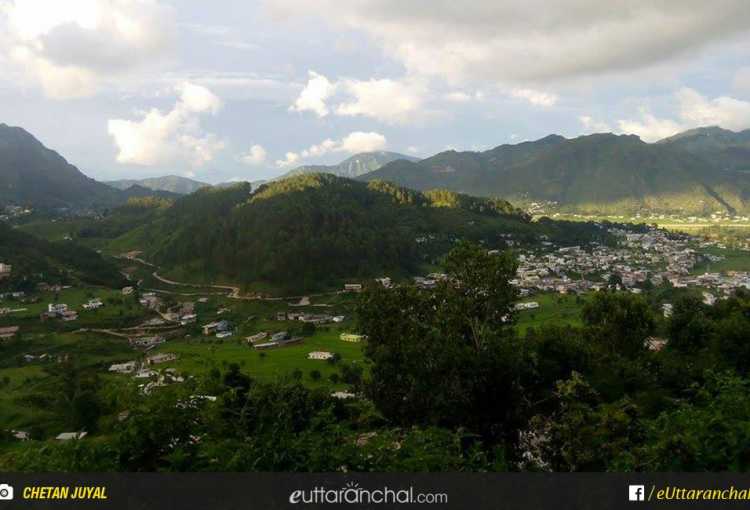
Pithoragarh .Photo courtesy (https://www.euttaranchal.com/)


Later , a good part of that land became surplus to the establishment . Gen BC Joshi had great ideas of utilizing these pieces of land for various projects. One such project was Herbal Farms.

The basic idea was to cultivate various herbal plants , with focus on Himalayan flora with guidance from a Defence Agricultural Research laboratory located there. It was part of DRDO  manned and equipped  fot researching on high altitude agriculture and related subjects . The herbal products were to be supplied  to various pharma companies like Humdard and Dabur.

During a visit by the Chief, besides army commander and other senior officers, the Chief Scientific Adviser to the Prime Minister had also been invited. It was none other than our missile man Dr APJ Abdul Kalam.

man of science , who never forgot his roots

During an informal meeting over breakfast at the DRDO guest house, I had an opportunity to listen to a part of the discussions.

Dr Kalam was quite fascinated with the whole idea. I remember , him talking  excitedly about a herbal cure for cancer based on a plant called taxus buccata. The drug developed by Dabur had recently been cleared by US, (in circa 1993). The name dropped casually by the great man, had got stuck to my memory since then. It’s a different matter that we haven’t heard about it since then.

The discussions meandered along over various native herbs used at various parts of the country. There was also some talk by Dr Kalam of some herbs being used for family planning in the rural areas. 

After Gen BC Joshi’s untimely death the projects he had initiated had also died gradually.

If only we had had the will and a budget to support the idea of a Herbal Farm of that magnitude, it would have resulted in preservation and propagation of many rare medicinal herbs. Just as modern medicines suppress the immunity system of the body, the craze over allopathy has suppressed the native systems of medicine . Indians have simply forgotten to heal themselves.

In a broad sense, allopathy is a means to study and combat diseases ,while ayur veda or Yogasan deals with study of and preservation of health.  

As case of self fulfilling prophecy , the higher budgets world over has led to more research and more advancement in allopathic system. Lack of support has reduced ayurveda to a dubious, alternative system of medicine.

Today, for diagnosis , emergencies, and trauma care , allopathy is definitely  far ahead of any other system. In preventive health care and  non intrusive therapy, Ayurveda scores. Unfortunately , only people who cannot afford the high cost of western system of therapy opt for the native one. 

A point that is very much debatable is the ethical side of the western system. It encourages people to break every rule of healthy living as they believe health can be bought from Hospitals and to a great extent, it is true. Health is bought and sold by Hospitals though the rates are driven by  insurance and pharma companies .

In the next post, I shall write about my own experiences in facing a serious health challenge. 

Why Modi is hated by some?

On Social Media , all most all controversies just boil down to pro modi / anti modi discussions. It could be about the national plan for vaccinations or it could simply be choosing samosa over pizza. Strangely, a wide spectrum of people with totally different ideologies or cultural backgrounds are united in their hatred for Prime Minister Modi.

What is common between Farhan Akhtar and Mamata banerjee; between Swara Bhaskar and Asauddin Owaisi ; between Sashi Tharoor and Thol Tirumavalavan ? They all harbour visceral hatred for our Prime Minister. There is hardly anything else common. You may say they are all Indians. Add Greta Thunberg ,Rihaana Who or Mia Khalipha and you find that the hatred has gone international.

Another point to note is that as long as BJP was not winning too many elections and was no threat to the power at the centre, they were just considered by the elite as untouchable , worthy of contempt but not hatred . Now, BJP under Modi is steadily winning elections at the centre , state and local bodies and the hatred is palpable.

BJP being elected to power something that the haters cannot stomach. The irony is that different people hate Modi for different reasons.

First let us take our MSM , the main stream media. The media personalities considered themselves gods under UPA. The infamous radia tapes , well suppressed by the media , brought out the clout media had on political happenings including cabinet formation. The issue is not if the script is real or fake , but the unethical influence of media on formation of govt. Nobody seems to deny that people like Barkha Dutt , Rajdeep Sardesai or Pranob Roy were close to the seat of power. Padma awards were routinely awarded to these journalists and so were other perks. When PM went abroad, he took along this entire lot at govts cost.

Under the present regime, all these perks dried up. PM is often accused of avoiding press conferences. Why should he speak to these elite lords and ladies of the press when they neither understand nor care for the vast majority of non-English speaking Indians? Our PM is particularly articulate when he addresses the common man; why risk his words being twisted by these knaves to meet their own agenda ?

Well, the bottom-line is that English speaking , Macaulay putr/putri MSM harbours a visceral hatred for PM .

Then we have our pseudo-intellectuals who often equate English speaking and phoren degrees with intellectualism. They are put off by Modi for his rural background.

About the minorities, which do not include the real minorities like Jains or Parsis , less said the better. Their unspoken hatred for Hindus surfaces when they see him wearing his religion on his sleeves. So far, it was only the privilege of the minorities. In short , they hate him for being a proud Hindu.

Then we have the Dravidians , who call themselves secular, yet look at every issue through the prism of caste ,religion and race. To them Modi represents the Hindi speaking Aryan . It does not matter that Modi is not from the parpanar caste nor that his mother tongue is not Hindi. So is it with Amit Shah where it does not not matter that he is from Non hindi speaking minority community.

Why does Bollywood hate Modi ? It’s rather difficult to figure out; except that Bollywood has its own culture of minority worship and majority bashing. With the kind of obscene amounts money that is sloshing around from narcotics and other illegal activities, the politician-police-underworld nexus is particularly strong in Mumbai and film personalities are very much part of this eco-system. It doesn’t help that there is a huge ‘gulf‘ between Bollywood and Sanathan Dharma. The last celebrity who went about as a proud practising Hindu was Gulshan Kumar . We know what happened to him . He was killed in a Mandir for refusing to pay extortion money.

Whatever, from vocal critics like Farhan Akhtar , Swara Bhaskar to an aspiring starlet, they all hate our PM.

About INC leaders, it is obvious that they would oppose the Govt, but the special hatred they reserve for that one man is too unique to be missed. In the run up to the 2014 general elections, I distinctly remember Mani Shankar Aiyar in one of the TV Debates. He could see the writing on the wall that Congress would lose, but kept maintaining that BJP would also be giving them company in the opposition benches. he was particularly happy that BJP was led by Narendra Modi. That’s when he made the chaiwala statement in his arrogance that BJP led by Modi could never win. Moreover the congress had great confidence in the ‘maut ka saudagar‘ image they had built carefully for Modi. Those days I did believe NDTV , but seeing their brazen partisan reporting these days ,I can only surmise that in 2002 they just cleverly camouflaged their bias.

Congress has still not come to terms that someone who they dismissed as chaiwala at best or maut ka saudagar at worst could be elected through popular mandate. Here their hatred for Modi also becomes hatred for the country that voted for him. How else can you explain Rahul Gandhi appealing to US for overthrowing this govt.

Last but not the least we have an elite class in the country who hate Modi. They do not come under any of the above categories but could be identified by their affinity for the West. They speak like them (faked accent) , dress like them and behave like them. Most of them have earned their money in dollars or are still doing. They live in a gated community moving from hotel lobbies to airports in Chauffeur driven cars. They dislike almost anything desi from food and drinks to TV Shows to Desi Vaccines.

Then why are they here ? It is only in India they can have a section (an infantry section has 10 soldiers) of foot soldiers waiting on them hand and foot. For healthcare , they don’t have to wait for months or years like in Canada or go to a private hospital that cost a bomb like in the US. It is in India they can walk their western dogs (anything desi they wouldn’t touch with a barge pole including flora or fauna) and yet don’t have to stoop to pick up the poop. Why , they can even hire a desi hand for walking their dogs.

This lot simply cannot forgive Modi for being a Desi. During the Pandemic they realised that they had to rub shoulders with desis for hospitals and oxygen which was just not acceptable.

A lot of people call Modi a polarizing figure. Why ? what has he said or done to polarize ? People like Asaduddin Owaisi, Bal Thackeray, or even Sonia Gandhi, Mani Shankar Aiyar and recently Mamata Banerjee have said things far more polarizing. Well, all that Modi has done is to win elections despite being an unapologetic Hindu, just being himself .

In this great Indian hatred many important issues that are lost :-

(a) For the first time we have a govt that is not involved in any corruption scam! This is a big achievement in India where Former PM Rajiv Gandhi had once said only 14 paisa from every rupee spent by the govt reaches the beneficiary.

(b) For the first time, cleanliness is an issue. I can see the visible changes in Indore, not only on the streets but in behaviour of people. I agree we have a long way to go; but even the longest journey starts with the first step.

(c) For the first time we are thinking of an universal health scheme ; Ayushman Bharat.

(d) For the first time the govt is working on of universal access for cooking gas and piped water supply.

(e) Right or wrong, we have a govt trying seriously to solve problems like J & K issue , illegal immigrants , Ramjanmabhoomi , labour reforms, agricultural reforms etc that have plagued the country for decades.

These views would definitely qualify me to be called a Sanghi in decent or not so decent terms. But then , having been through the social media for over a decade, today Sanghi would be a Title I would wear proudly on my sleeve. A Sanghi who has never been to a Shakha.

Travel , Then and Now

Having served in army for over 35 years one is quite used to all kinds of travel. Some moves are well planned and comfortable but many were unplanned moves in remote areas in difficult weather conditions, sometimes with a huge baggage and accompanied by family including infants. One generally had to be alert every moment looking for connecting mode of transport and keeping an eye on the baggage and a trip with small children meant hunting around for hot water or milk every few hours. At the end of 48 hours or more , one arrived at the destination totally weary and absolutely groggy with lack of sleep .

Recently I had to make an unscheduled trip from Indore to Coimbatore. Of course , there was that anxiety while pouring over the options for move, on the net . But, within minutes we decided on an option and the booking was done online. It was a tedious itinerary going by current standards as it required three legs of flights with a layover of six hours or so.

Today, preparations for a travel means loading your digital wallets, configuring the settings for transport apps and doing the web check in.

From then on it is just walking through airports and hotel lobbies waving plastic cards and tapping on mobile phones.

Food, stay, transport and other services are taken care off while digital transactions happen automatically. For a person well provided for, it would be only of academic interest as notifications keep coming in ,on phone, indicating the charges for various services.

Most of these notifications start with thank you for using this or that . Cab drivers or hotel staff serve you and thank you for letting them serve you. Any tips from your side widens their smiles and expressions of gratitude. So, besides the digital wallets , you only need to carry some currency notes of small nominations to render your environment even more pleasing.

Most of these service staff would be living in congested living space, buying their basic food on street side outlets , paying with their meager, hard earned cash. They would have reached their work place commuting for long hours jostling in a public transport.

Do we really deserve this kind of service? If so what have we done to be waited hand and foot by the less privileged?

In the same trip , we also had an opportunity to travel by a public transport on road, for 40 Km. There were the traffic snarls with the scorching mid day sun beating down the windows . Besides all seats being taken, the bus also had some standing passengers stoically staring into the space ahead. One standing passenger inadvertently tread on another’s foot and the next 15 minutes or so there was such a nasty verbal brawl that could be heard by every passenger. A digital traveler living a bubble existence in airport/hotel/AC car would never understand why the commoners are so ready to take offense over seemingly minor issues.

It is so easy to be unflappable or magnanimous when all your physical and mental requirements are taken care off . The real test to equanimity is when you can be compassionate even after a sleepless night, thirsting for a glass of water and are not sure about your next meal or the next leg of journey.

It is not just a travel, even the journey of life is absolutely smooth for some while every moment is a struggle for many. As I see it, majority of common folks struggle to attain even a moment of peace in their lives . A privileged person living an entitled existence may or may not be aware of what goes though the minds of these less privileged beings. This lot most often, would also include some of our own kith and kin.

Thirukkural has a couplet on righteousness, that says “anyone would understand the need to lead a righteous life as the result of leading such a life is evident by seeing a man sitting on a palanquin and the persons bearing the palanquin.” At least I don’t understand . There are a number of commentaries ranging from one extreme to the other. One says, “one who follows righteous path will get to ride on top rather than bear the load “. Another says ,” One who rides is equanimous to good and bad fortune while the one who bears the load is always unhappy” .

Whatever be, for ages , humankind has seen one class bearing the load of others while another class , a minority, don’t even need to bear their own weight! Machines to a great extent have removed the need for physical lifting of the entitled through muscle power; but even the most advanced society can still be divided into categories of lifters and leaners ,figuratively.

I don’t think we can ever achieve that state of universal equality. As I see it, some are chosen to lead a privileged existence just so that they are in a better position to bring some physical and mental comfort to the less privileged by providing some financial help and by their genial behaviour.