Zoho and other Intellectual Products

Today , I was surprised to see the headlines “Mexico slaps 50% Tariff on Indian goods”.

It was even more surprising to the list of goods exported by India. It’s not just aggro products like tea and rice or raw material like buffalo hide. The list includes Vehicles, electrical machinery and mechanical appliances.

We have come a long way from the craze for foreign goods as anything and everything can be made in India.

But when it comes to intellectual products , we still look to the west ; be it software,  research reports ,  or just news reports.

The BBC, Washington Post, and New York Times are regarded as professional and neutral, yet they are no less biased or driven by profit than any other media outlet.

Our “journalists” write for outlets like WP and NYT to criticize our country (not merely the government)  not because they can’t be published here, but because the Western media amplifies this negativity and it is better accepted by our own elite.

Coming to the research reports on economics and society , the less said the better. How  can you explain the report placing India long way behind Palestine and Pakistan in the Happiness Index, unless violence and poverty are considered as sources of happiness.

Recently there is a report stating that 1% of Indians control 40% of the national wealth. Only last year the world bank had come out with the report placing India at #4 in Equality of Income based on Gini index. All these reports are like made to order depending upon the geopolitical scenario. Our own ‘intellectuals ‘ lap up these results as some kind of God’s word.

I don’t say that these reports should be summarily discarded; but let us question the reports from the West as we question our own.

Lastly about the software , Indian tendency for self flagellation reached a peak in criticizing Zoho and its public face and the Chief Scientist ,Sridhar Vembu.

At best Zoho is seen as a poor copy of Google or MIcrosoft.

Nothing can be farther from truth.

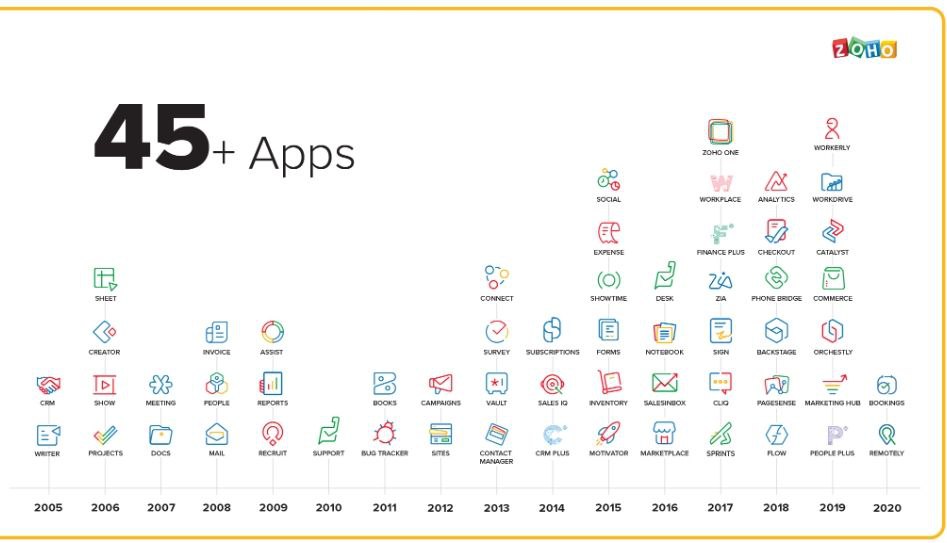
I am writing this piece on zoho writer which was launched long before google doc. Similarly , Zoho Show , and Zoho sheets came before Google Sheet and Google Slides. Zoho Cliq was launched earlier as Zoho Chat in 2008 while Google meet came up in 2012.

Since both companies did many updates on their apps , the information available is ambiguous. Whatever be, Zoho and Google were competing with each other for 20 years rather than copying each other’s apps.

Google definitely is miles ahead in some niche segments as You tube and search engine.

Zoho definitely has an edge purely as CRM and SaaS due to some apps like Zoho books, Zoho Invoice etc. There are about 50 products for office productivity.

Yet Zoho and its CEO face criticism in our country , not due to any  technology yardsticks but because Sridhar Vembu is seen in Veshti in public. It is seen as showcasing cultural nationalism! To be considered a CEO in India one has to be in Suit and Tie ! How ridiculous can it get !

It’s time we stop running after ‘phoren’ views and ‘phoren’ software just as we are coming out of the craze for ‘ phoren’ goods.

It’s time we started trusting Indian Software like Zoho products !

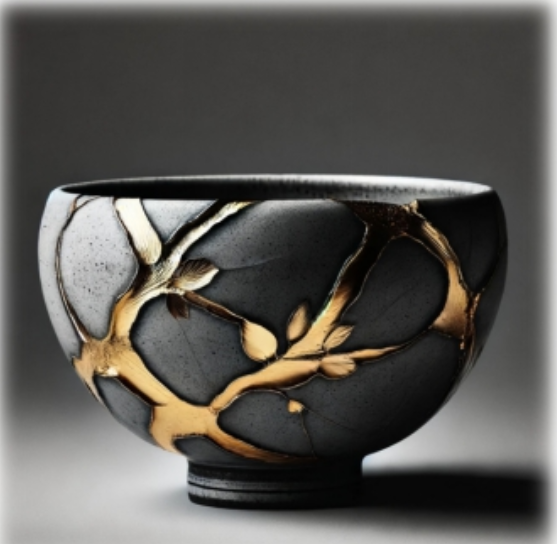
Wabi Sabi

Nothing can tell more about a culture than its ‘untranslatable’ or ‘difficult to translate’ words.

The word doesn’t have to convey something deep—it might simply describe everyday actions or even be a swear word.

Such words also help in gaining a deeper understanding of your own culture.

As I see, these words should never be translated but always used in their native language, as there’s a clear danger of the entire concept being totally misunderstood.

A case in point is the Sanskrit word “Dharmā ” that  has come to mean religion as it is is understood in the West. A whole idea evolved and nurtured over millennia is just lost in translation in one generation.

Wabi Sabi is a subtle Japanese cultural concept deeply embedded in daily life, yet rarely discussed, not defined, or translated.

Since we need known words to understand unknown words, it could mean

Authenticity

Simplicity

Imperfectness

Asymmetry

Impermanence

Uniqueness

It’s similar to the word Shibumi, which can carry different meanings depending on cultural and generational backgrounds.

No matter what, if this idea takes root in how you think and see the world, you’ll experience greater calm, a deeper acceptance of the world, and a more compassionate acceptance of yourself as you are.

No doubt , its a great idea.

For someone native to the culture, a few words or a simple gesture might convey the meaning, but for those unfamiliar with Japanese culture, an entire book would be needed  and that may still fall short.

Enjoy Reading : Embrace a Happier, More Fulfilling Life : Cheers !

Your Body Knows


But then…   

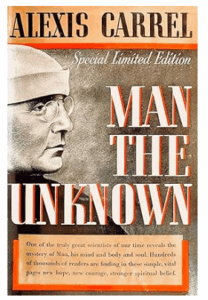
Man the Unknown is a classic written by a leading French surgeon and biologist in 1935 , highlighting the aspect of how little we really know about the human body.

Science has made huge progress since then but the question remains .. “Do we really know enough about the human body to lay down  binding  rules for the whole world.

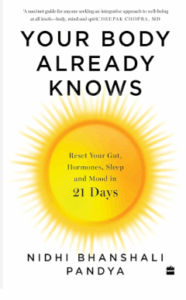
Your Body Already Knows is a written in 2025 by a successful  practitioner  of Ayurveda from US. Yes, to be taken seriously one has to speak from Texas rather than Tenkasi.

Recently , the Chief Scientist of Zoho Corporation was in  controversy over his skepticism of a few vaccines like HPV among others . He also suggested that the rise in autism in the United States had something to do with the increase in Vaccine shots administered to infants in US. As always , the critics , who are anything but scientists cried “Anti- Science” , “Science illiterate” and of course “Sanghi at heart”

Since when questioning has become Anti Science ? Science is all about forming a hypothesis , then questioning that hypothesis  and proceeding to prove it one way or the other through experiments.

One Tweet on this issue   is definitely worth pondering over ….

…..To understand why medicine is so complex, let’s make a crude simplifying assumption that there are only 100 biomarkers that are important (in reality there are vastly more). Let’s also crudely assume each marker is allowed only two values. That gives us 2^100 possibilities, which is about 10^30. That is vastly more than humans that ever lived. And this is with the extremely over-simplified model. We face a practical infinity of possibilities. In reality, no two patients are ever really alike. No statistical model can give you very high confidence on how to treat. That is why AI can never treat patients, because human doctors exercise something called “clinical judgment”. That judgment is what enables a doctor to tell us “this is not a serious issue, get good sleep” vs “this definitely needs deeper investigation”. That judgment is hard. Often they cannot even explain why they arrived at this but great doctors have that intuition. The entire Big Medicine is about systematically dismantling clinical judgment and convert doctors to mere “protocol pushers”. Great doctors resist this. 

Who is this “Big Medicine”..  It’s the pharma industry and the insurance industry. Scientists and doctors (yes ,they are different entities, doctors are not scientists and scientists are not doctors and most critics who use science as a shield or neither scientists nor doctors ) are bypassed.

It’s against this backdrop that it makes sense to listen to your body as your body knows something that that doctors, scientists and the Big pharma don’t know.


What is AI to a common man


There is much talk of AI among the common public. On one hand the common man hardly uses any AI enabled app or features and on the other hand there seem to be  a strong conviction that AI will do everything for him.

I am presently developing and maintaining a couple of web applications for database operations.

I hear , “why do yo need to make an application ? AI will do it for you.” Mostly such questions come from folks who don’t even use emails.

Does it mean I  just put in a request to ChatGPT , “please make an application for me”

Yes it is possible , but it would just  be the first question of a long series of a dialogue.

Then , what’s the cost for use of AI ? What will the developer charge you for getting your app done through AI ? Is he going to charge you less because he is using AI or is he going to add the cost of AI to your bill ?

Just as a computer does not work on its own, AI too does not read your mind and fulfil your desires.

It is powerful, it is versatile, it is very helpful for drawing pictures, drafting, coding, collecting and collating information , decision making and just about any of your day to day activities on a computer or a smart phone.

But you have to be doing something with your natural intelligence to begin with.

For someone to appreciate the power of AI , one should have to be used to googling. There was a time when there was a plethora of search engines . The novelty of the net was there, but even then it was getting frustrating to get any useful actionable information through these search engines. For eg if you wanted to know about motherboard , you were given all kinds of pages on mothers and boards, but nothing about a mother board as known in the computer world

Google changed all that and became the benchmark for search engines.

Yet , not all top results were relevant to your needs. One ended up browsing through a whole gamut of news, pictures and videos and clicking half a dozen links for commercials in the process.

It’s in the  light of our experience with search engines, one needs to look at  an AI app like ChatGpt or Deepseek. The AI app too depends on its database for the output just as the search engines.

How can AI help you and me in our day to day work.  The answer would depend on what you are doing today without the help of AI, using only your natural intelligence.

Obviously the job of brushing your teeth can’t be delegated to ChatGPT.  Are you drafting letters? Do you work with graphics or drawings? Do you collect and collate information on a regular basis ? AI can help you in all these areas .

How is it different from googling ?

A search typically throws up about 20 million results in 20 seconds. Then you are left to browse laboriously through tonnes of relevant and not so relevant material to find what you want.

A question to an  AI app gives you a concise summary of a typical Google search.

If a search engine were like a librarian who points at the relevant subject rack or shelf, and AI app is like a research assistant who studies the material and gives you a gist.

What fascinates me is that AI actually fills in the gaps of my own inadequacy in many areas.

My language is too academic or terse. I give my writing to ‘perplexity‘ and say ‘hi make it more casual’ ….and it does ! You will no more recognise your own style in the text.

I write bad code. I can just copy paste it on to grok site and ask ” would you please fix the errors and give me good code? “

I am no artist. I tell the app , ” please draw a cartoon for my blog”.  The pictures displayed in this blog are all AI generated.

So, you can compose music like AR Rahman with a tone deaf ear ; write like Shakespeare after failing in high school English and draw like Michelangelo, with no taste for colors or proportions.

Fun isn’t it ?

Then why do you need AR Rahmans at all ? Let’s ask AI.

That’s the bottom line from Gemini

Final Thought: AI isn’t going to kill artist careers. But artists who refuse to evolve at all might find themselves frustrated by the shifting landscape. The key is using technology on your own terms—in a way that supports your creativity rather than replacing it. So no, AI won’t write a song like you can.

Very aptly put; leverage technology in your own terms to evolve; whatever your doing with your natural talent, you can do better with AI. In areas where you lack talent, you can lean on AI for help.

But then, as we see around us,  without application of their natural intelligence Artificial Intelligence is of no use and most people don’t go beyond WhatsApp forwards.

Well if you are happy doing what you do without the help of AI, just carry on that way.

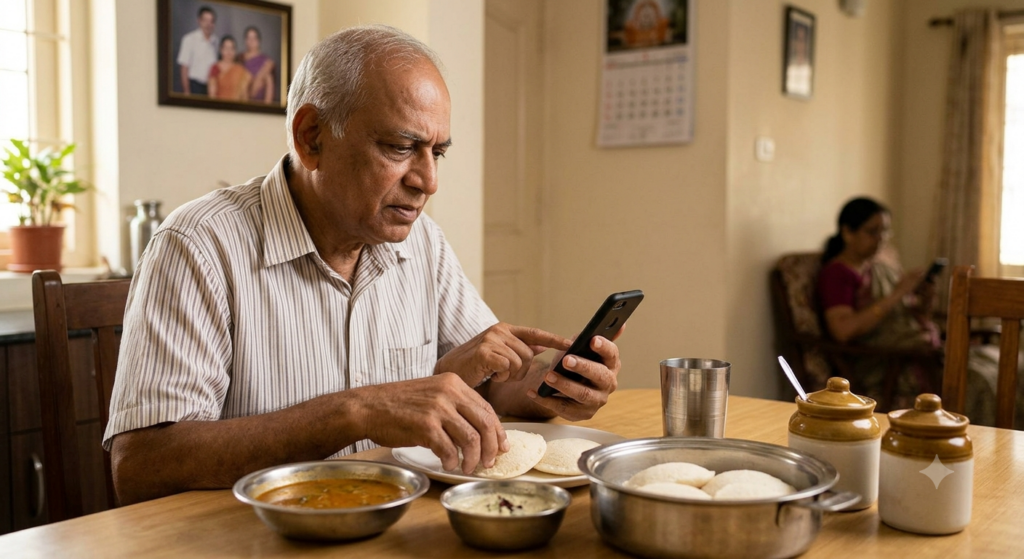
Recently I saw some senior citizens who went into panic mode (thanks to the ubiquitous   Whatsapp forwards) that their data would be stolen by AI  if they don’t take such and such actions !

As common folks, let’s not worry about the global economy or the threat to employment prospects or not even data theft for we can’t do much about it.   Just have fun with AI. Don’t take it seriously;  just have fun.

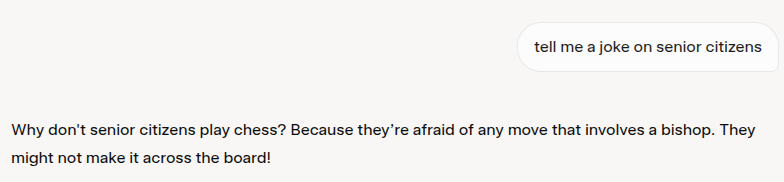
“Ask meta to draw a cow sitting on your drawing room sofa; ask ChatGPT for a joke on senior citizens; ask any wild questions and let go your imagination and have fun”


A Great idea :OPOS (One Pot One Shot)

    What’s Cooking ?

    There are no ready-made solutions to every day requirements , but ideas keep floating everywhere and who knows what ideas  provide the  right ingredients for the solution you are looking for and sometimes you may not even be consciously looking for .
       One such great idea floating around is OPOS (One Pot One Shot) style of looking. Who knows, it might be a life changer.

       A generation back, eating out was rare. For boomers, it was a given that they had to cook their own food.

      The Gen Z and the millennials  think differently and face different kind of problems. On  one hand they do not have the  time or inclination for cooking and on the other hand they are getting too health conscious to depend totally on Swiggy and Zomato.

So what’s the way out ?

OPOS (One Pot, One Shot) is a set of scientific cooking techniques designed to unchain you from the kitchen, cut drudgery and empower anyone to cook confidently. All OPOS recipes use One Pot and all cooking is done at One Shot. No steps. No supervision. From pastas to paneer makhani, malai kofta to mysorepak, OPOS recipes are easier and faster than cooking instant noodles!

Every word makes sense.

It is Scientific . While taste is highly subjective , issues like preservation of nutrition value or time taken or caloric value etc are objective.

A Call in Progress

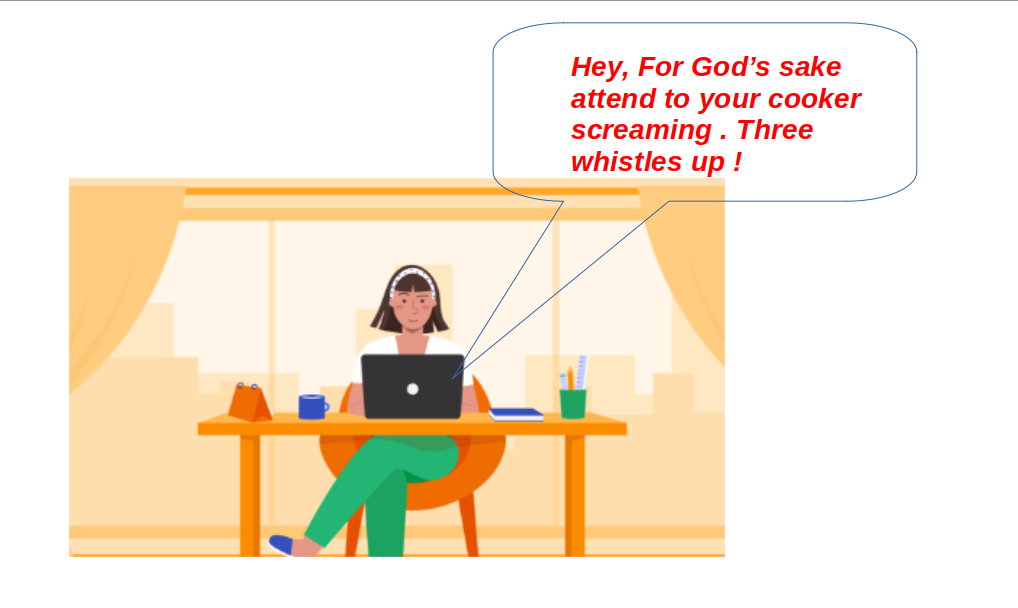
No Supervision is required . You get an alert after a prescribed time . I remember , even boiling milk used to be tricky as the saying goes ” The milk never boils over when you are watching” . A few seconds of distraction and the milk is all over the stove and kitchen  platform. A simple milk cooker , I remember , was a great boon.  Looking back to childhood days, whistling of milk cookers in the morning was as common as Venkatesa Suprabatham at home. Any member of the family could answer the call of the cooker so that there is no crying over spilt milk.

It’s a Technique.   One just  needs to understand the basics to cook any kind of cuisine. 

It makes cooking a science rather than as art.

OPOS is Clean. Hygienic. Less of a mess.

OPOS is Fast. Fresh food in minutes.

OPOS is Liberating. No supervision.

OPOS is Healthy. Maximises nutrition.

OPOS is Flexible. Cook your way.

OPOS is Economical. Saves fuel and water.

OPOS is Tasty. Intense flavours.

OPOS is Transparent. Works for all.

OPOS is Consistent. Works every time.

OPOS is Universal. Cooks all cuisines!

About the founder: 

Ramki passionately believed anyone, anywhere, anytime should be able to cook great food, with great ease. He sold his software company to focus full time on his passion. The one page cookbooks came first. OPOS followed a decade later. He is now a consultant, columnist and CEO of Pizza Republic and OPOS Kitchen. He holds the record for cooking solo a 10 course marriage feast for 500 people in 3 hours, using OPOS techniques. His first book, 5 minute Magic, the first OPOS cookbook, became an international bestseller. His second book, The Story of India through Food, won the 2020 Amazon Kindle Pen to Publish contest. His third book, 10 Minute Meal Plans, has been  published by HarperCollins.”

Ramki says

It took us 15 years, 780 blog posts, 26097 volunteers, 52 children, tonnes of provisions, 1208 files, 10411 Facebook posts, 5601 photos, 320 videos, millions of arguments, 1 dictator, 15 comedians, 1 world record, 4 restaurants, 16 chefs, 14 events and 22 corporate demos before the first OPOS book was published in 2018.

The more I mull over this idea, it seems to be for the millennials rather than for a boomer like me.

What caught my attention first was that it’s the brainchild of a software professional and I love the logic and precision that only a geek can bring in.

The hardware hardly costs; it’s less than what a family spends on one dinner out.

Anyway, it’s the software that matters more .

I am deliberately excluding the link as any AI platform can tell you much more about OPOS than I , possibly, can. Make sure you search for “OPOS cooking” . The present generation speaks only in abvn (abbreviation) , who knows what else OPOS could mean,  idk; nvm.


Reading or Writing : Pastime or Purposeful


Reading is mostly a passive activity for most people , but it can be an interactive pastime too. Even fiction can be so stimulating ; as against some passive leisure activity, when there is a constant churning of the mind through reflection, debate and criticism .  This is particularly so, when you intend to follow up the read with some serious writing.

Here I  shall restrict myself to fiction.

There are writers who start with a pain point in a society. It is this issue that is aimed to be conveyed from different perspectives. Then characters and events are so developed and the main issue is never lost sight of. There are stretches ,particularly in a long novel, where the writer goes on to some superficial aspects of life, just enjoying writing about the day to day happenings. But a reader is by and large kept anchored to a deep reality.

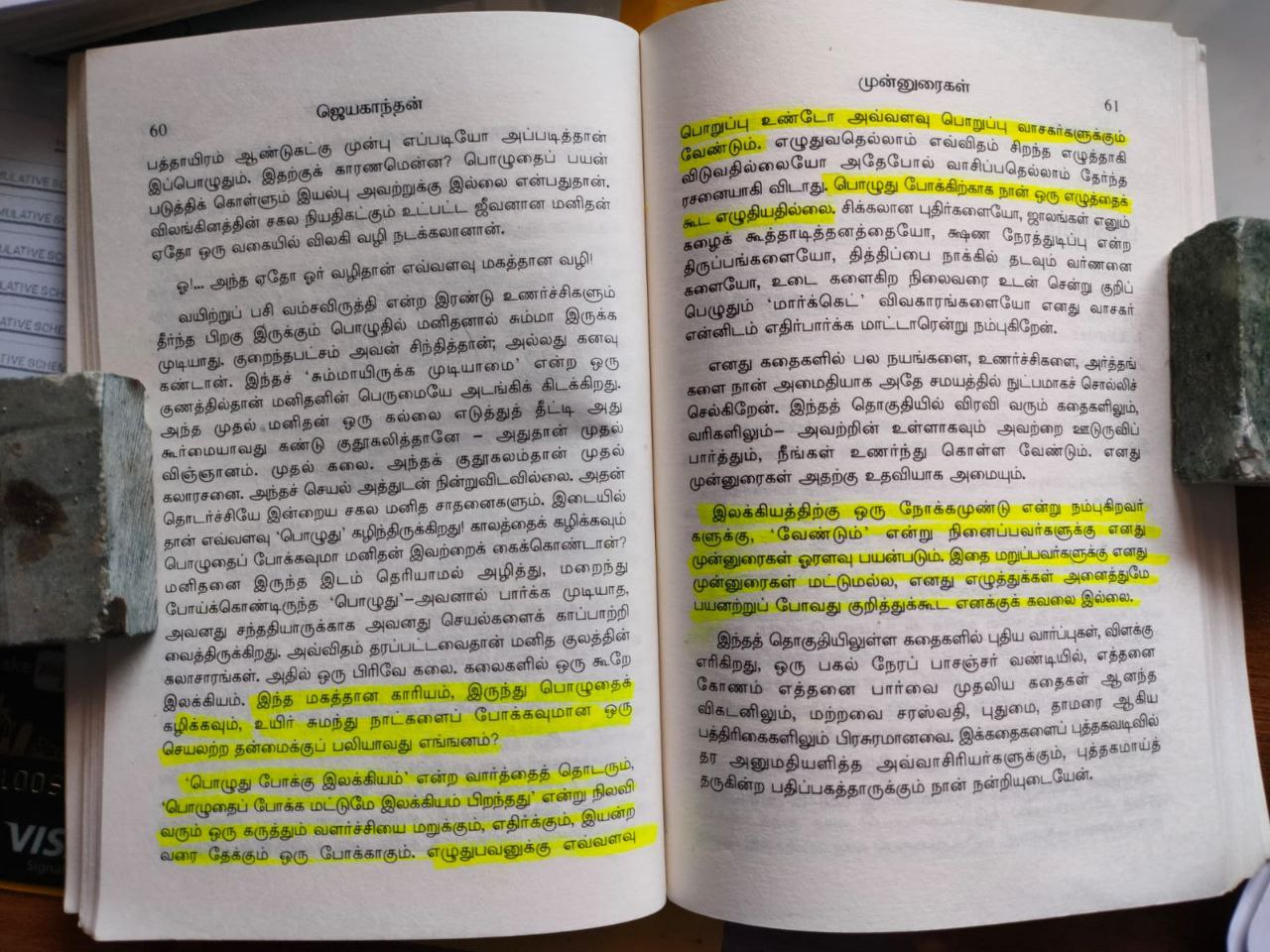
Jayakanthan says in his foreword to a short stories collection , that he has not written a single word as a pastime. He comes down heavily on his critics who demand that kind of leisure reading .


Once when Mahatma Gandhi was ill , doctors advised him to avoid stress. He asked , if it was okay to read. He was told he could do light reading . Gandhiji asked “ What is light reading ?” 

Then there are other writers who just love writing ; enjoy writing for the sake of writing. They are happy showing to the reader an exceptionally painful or beautiful or maybe a comical scene from day to day life. These scenes may relate to the realities of that period but the events themselves stand out making no moral judgements on the society or individuals.

As someone who loves reading Tamil fiction , I would say, Thi Janakiraman or Jayakanthan fall in the first category while Sujatha or Raa ki Rangarajan would fall in the second. 

Both types of writing can be immensely enjoyable depending on the reader’s mood and inclination . There are times when one  is so carried away by the style of writing that nothing else matters much. 

Recently , I read a book by Raa ki rangarajan “Housefull”  the writer says “Just for the fun of doing things differently, he started with the fourth chapter and let the reader guess the earlier chapters. Then he went on to the third , second and the first chapter , in that order,  to resume the story from the fifth .This was done as a serial in  a weekly magazine. He observes with satisfaction that no reader had any difficulty in understanding the story nor were they any complaints .

That’s pure fun of writing and reading.

Most people would agree that it is the leisure kind of reading that’s more popular. 

There are many writers who need to put in a lot of effort to  write pulp fiction and there are wordsmiths who effortlessly write on serious themes. Whatever be the kind , for a discriminate reader , it shows when the writer enjoys writing as much as the reader enjoys reading.

The pure joy of writing comes, I suppose, when there are no deadlines to meet and no conscious effort made  to make money or to please his readers.

To wind up, here’s an interesting anecdote from Mahakavi Subramanya Bharathi.  

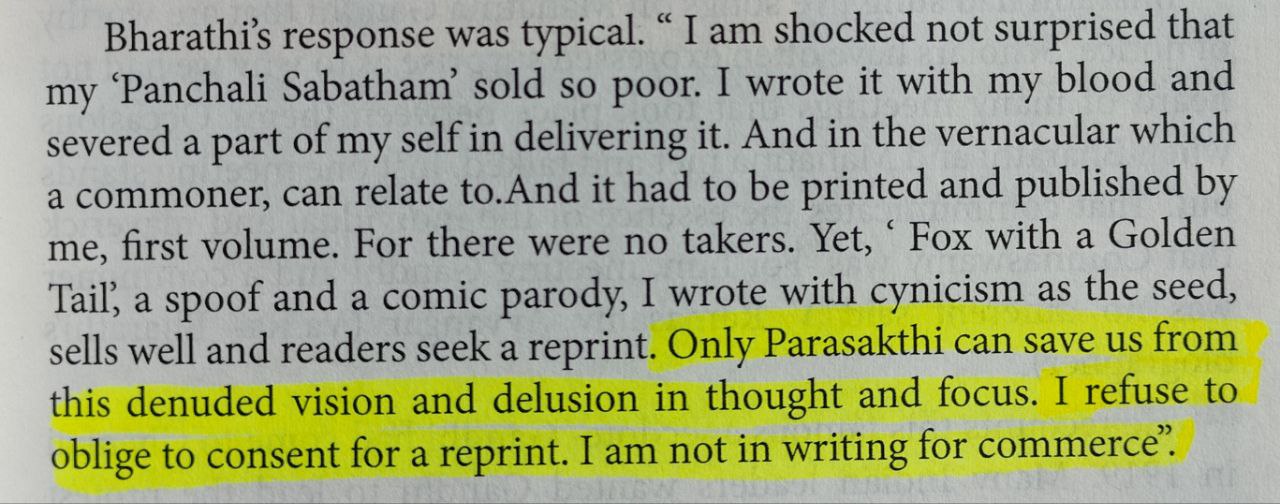
Bharathiyaar wrote his master piece Panchali Sabatham in two parts . The first part was published by Bhartahiyaar himself in 1912. Unfortunately there were not many takers for this book. Around the same time, he wrote a parody on the elites in India aping the British,  “Fox with a golden tail” . The book was written in English just for the fun of taunting the anglophiles in India and the condescending Indo-philes from England.

The book “Fox with a golden tail ” sold like hotcakes ; so much so that there was a huge demand for reprints .

Bharathiyaar’s reaction was typical .

There’s a story that he gave away the English book for free to anyone buying his Tamil masterpiece , Panchali Sabatham.

A Passport to Jupiter


I must warn the reader that the title is very misleading.

Mhow cantonment is a small place and most often the morning walkers cannot avoid meeting and greeting every other walker and there are times you meet more than once in a single session. It’s generally a wave or a nod without breaking your stride.

On one such nod, something made me stop. The lady’s face was full of questions and it was obvious that she was trying to put them into words. “Aren’t you handling that insurance for Jupiter ?” or words to that effect.

I have heard of mangal- yaan and Chandra -yaan , but Jupiter -yaan was still light years away. It took some time for me to connect the dots. Yes, I am part of the organization facilitating purchase of health cover for veterans and this health cover policy gave the insured access to Vishesh Jupiter Hospital, currently the most preferred hospital in Indore.

For years , veterans have known nothing except the military hospitals , though they were some of the best hospitals in the country during the socialist era, pre – 1990. Post 2000, the private hospitals came up in a big way and today hospitals are not just for medical treatment but are competing with hospitality industry in services providing comfort and good life .

Despite the huge progress the country has seen in health care facilities, veterans covered by ECHS have very few empanelled hospitals , particularly in tier 2, tier 3 cities.  So, the idea of  five star hospitals is always a talking point . 

During our morning walks , I hear as much about the cuisine at Jupiter hospital Cafeteria as about the medical facilities. One also hears about the wide range of rooms available for an in patient. A hospital is no more a place just for medical treatment. 

The Passport to Jupiter

Most multi specialty hospitals remain out of the reach of veterans depending solely on ECHS. Under the circumstances the health cover provided through our organization , Sainik Seva Samiti is certainly a passport to Jupiter.

Forgotten Investments Perform Well !

As I sat watching  the last sunset of 2023, musing over the year it was,  it occurred to me that the year has been a phenomenal one for stock market watchers.

While the individual stories may differ, there would be a general consensus that the year has given above average returns to hard core professionals and absolute novices , alike .

So , is the stock market turning attractive to the public ? Is everyone trying to get into stocks and mutual funds ?

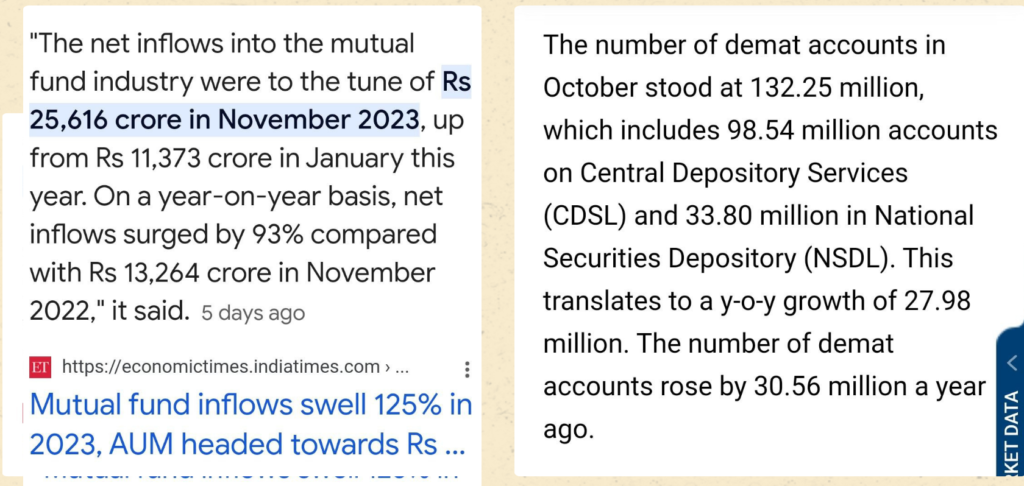
Curiosity kindled , I turned to Google for some quick figures.

As expected, the MF inflows have increased by 125 %.

The number of demat accounts increased by 27%.

So is it going to be many happy ‘returns’ year after year? Are all the new investors going to be blessed by 15-20% annualised returns for rest of their lives?

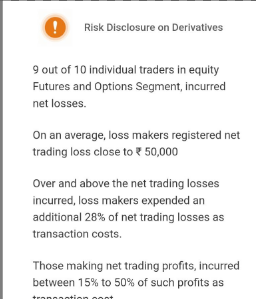
The investment world seems to be a happy place and yet we keep seeing threatening, mandatory information wherever you try to enter .

Anecdotes abound in many a family about uncles (never aunts) who went bankrupt due to Dalal Street.

There are many who believe, not without reason , that stock markets are gambling dens .

So, what’s the truth ?

Who makes money and who bites the dust?

I am sure many would have come across the book ” Psychology of Money ‘ by Morgan Housel.

The author states emphatically that it’s all in the mind .

That’s the theory and today I saw it in the real world.

A friend of mine has a mutual fund portfolio created for him by somebody who is now not available to monitor the same.

The friend never bothered to check how his investments were faring.


I , a confirmed technology addict cannot refrain from checking through various apps and websites on how my modest portfolio was faring . At times it happens thrice a day and gets too boring despite the high that Dalal Street gives.

Looking for something to do, I casually enquired the friend about his portfolio and as expected I got an indifferent reply.

With some effort and the magic of internet I could compute his returns in minutes.

It was a ‘Wow’ moment as the last nine months had given him a whopping 50 % returns and he was not even aware of it. In simple terms, at this rate, his money was getting doubled in a year and a half.

That’s the kind of returns any mutual fund manager would be proud of any day.

What did he do right? He just left it alone by design or default.

What happens when you don’t leave it alone?

A human mind is hardwired to lose money in stock markets, sometimes at an astonishing pace.

When the stock / MF moves up a 10% the fear of losing that 10% says ‘ sell , sell !’

When it moves another 10% , (after you have sold) the fear of missing out and the greed for more says ‘buy buy !’.

So, one keeps buying high and selling low. In a bull market , this only minimises the profits while in a bear market , this phenomenon can wipe out your capital.

Smart people use  technology to quantify everything ,including emotions !

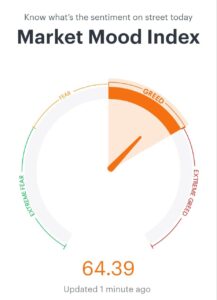
The market mood index is supposed to show the dominating emotions. Theory says , that a smart investor should buy when the public is in panic and should sell when the public shows avarice.

Will it work ? Unfortunately No.

As on date (01 Jan 2024) , Tech pundits say it’s  Greed that is dominating. Suppose this image goes viral among investors and the multitudes start selling , the indicator itself will be affected showing ‘fear’. That would mean ‘start buying’.

So in the age of technology and social media any action based on these indicators will influence the indicator itself !

So, what’s the way out to beat the street , in case you want to be fully invested in the stock markets directly or indirectly?

There are two options :-

The difficult way is to be Buddha like or as a karmayogi would say  ‘ be like the water on Lotus leaf; be there but totally detached ‘. See the ups and downs and the wild swings but don’t give in to greed or fear. It’s easier said than done.

A more human way would be to just invest and forget about it ; and probably that’s what my friend did right .

It would be fun to see how the new investors behave in a bad year.

Labels and Identities

Thesis and Antithesis: Courtesy The Guardian

Today we see a whole range of labels ; old labels  and new labels ; and also many old labels acquiring new meanings..

Anyone expressing an opinion on any issue is slotted into some rigid compartment and each compartment has a name for what they call themselves and what others call them, for eg anyone calling himself a ‘pure vegetarian ‘ may be called a racist or a bigot  by a ‘ liberal’ who himself would be labelled a woke by a ‘traditionalist’.

Identities and labels could be global or local; like Liberals, Indian liberals, libertarian, dem , republicans, wokes, Islamists, christoislam, sanghi, hindutvavadi, secularists, feminists , feminazi, black feminists, leftists , rightists, raita wing, trads and so on.

For the unversed , please follow the link to understand the ‘raita wing’ or Rayta wing’ politics.

https://www.opindia.com/2022/01/trads-vs-raitas-and-rw-fights/

Most of these labels are so defined to make it look beautiful or ugly as seen by the definer.

To someone an idealist would mean a person of character pursuing lofty ideals .
To someone else it could mean an impractical, head in the air , useless person.

I feel any label is better understood when you can identify the antithesis, so as to be able to choose between the two.

Idealist or practical ?
Idealist or an opportunist ?

Secularism has different meaning to different people.

Are you a secularist or spiritualist? Makes sense to identify yourself as one or the other.

Secularism or communalism ? (Makes no sense to me but the Indian liberals define secularism as opposite of communalism which itself means just living in a community,any kind of community)

Secularism or equality of all religions ?

This question makes sense in India where secularism has come to mean privilege for certain religions.

I would definitely choose ‘equality for all religions ‘ over ‘Indian  secularism’.

When it comes to finances,

What is ‘saving’ ?    Mostly it is taken as opposite of spending.

Can it mean something else, say the opposite of investment, or sheer indifference to money ; that precludes any conscious saving , spending or investment ?

The winds from the West are blowing all over, unsettling anyone  not anchored to his  roots.

‘Living’ in modern times means following your passion, following your interests and living for yourself.

Paropakaram idam shareeram is an ancient Indian concept.

Well, a libertarian idea of ‘living ‘ appears to mean ‘death ‘
as seen by  Swami Vivekananda .

Nurturing your gifts of talents is wonderful ; but  what purpose does it serve if that talent is not used freely and unconditionally to help the community or the surroundings such as to include humans, animals and vegetation?

Share whatever you have ;  knowledge,  wealth, or a  state  of peace and tranquillity . Serve unconditionally.

That’s also a way to enjoy life, perhaps that is living.

Book Review : The Nine Lives of Pakistan by Declan Walsh

The Nine Lives of Pakistan:
– Dispatches from a Divided Nation

The cover shows an iconic image of Pakistan in the backdrop ; the ubiquitous truck trundling along the rugged mountainous landscape.  They actually call it ‘truck art’. 


The byline says “Dispatches from a Divided Nation” . It could well have been fragmented nation or  a fissiparous nation that is so full of contradictions and so unstable; makes one  wonder if it is really “Inshallah” that it is still existing as a nation.

Having broken off from Bharat in 1947, the nation was further cut to size in 1971. Both the birth of Original pakistan and the birth of Bangladesh had been violent and bloody. Right from the time of inception, its borders were fluid and ambiguous on all side  except may be the Arabian Sea in the South.

Though the founder or The father of the Nation Mohammad Ali Jinnah favoured democracy rather than theocracy, the raison d’etre for  a separate nation for muslims made no sense to establish a secular democracy. That probably is an inherent contradiction that has been the albatross around the neck that Pakistan has not been able to  shed off.

The destiny of the country is controlled by the Army, Allah and America. It is this factor that kept in Zia in power though he was regressive and dictatorial. He was against freedom of press, emancipation of women and free multiparty elections; all that are considered cornerstones of a modern state.

Invasion of  Afghanistan by the Russians saw a confluence of  interests of Army, Allah and America . When the crisis was over in 1988, Americans were no more interested in propping up a martial law administrator and the soldiers of allah actually became the chief enemies of USA .

It is against this backdrop that the author, Declan Walsh analyses the happenings in Pakistan. He was in Pakistan from 2004 to 2013. His exit from the country came abruptly when he expelled from the country by the omnipresent,  omnipotent , omniscient ISI  . He didn’t even know what hit him and why .

Despite the 1971 debacle and the frequent interruptions to democracy by martial law , there was some order and some method in madness.The author singles out one incident that marked the beginning of the nation coming apart. It was the attack on Red Mosque (Lal masjid), Lahore by the army. Operation ‘Sun Rise’  ended with the killing of Abdul Rashid Ghazi. It also signalled the long drawn out war by the islamic terror outfits against the State of Pakistan.

The chapters are organized by important events and each event is described through the main player in that event. The Sieze of Lal Masjid is portrayed through the life of Abdul Rashid Ghazi.

The second chapter is on Jinnah highlighting his inability to lay down a clear way ahead for the nascent democracy .

The third Chapter is about Anwar Kamal Khan; a pashtun politician from PML. He is forced to take on the Taliban who were becoming too powerful in his native province. The chapter starts with establishment of  the Durand Line that  cuts through the Pashtun tribal areas and further south through the Balochistan region, politically dividing ethnic Pashtuns, as well as the Baloch and other ethnic groups, who live on both sides of the border. It demarcates Khyber PakhtunkhwaBalochistan and Gilgit-Baltistan  From a geopolitical and geostrategic perspective, it has been described as one of the most dangerous borders in the world . Talibans have shaken up the Pashtun society and pashtunwali to its core.

The fourth Chapter is on Asma Jahangir, the redoubtable social activist.  She showed courage to taken the mighty army and the ISI.  A chain smoking, anti-army woman is hardly an image one  associates with an Islamic nation like Pakistan.

The Chapter ‘Good Muslim ‘ is about Salman Taseer, a millionaire and a secular muslim throws up the eternal question “who is a good muslim ?”. It is a question that always bothers the community. Salman Taseer (known to indians as a one time partner of Indian journalist Tavleen Singh ) is among the rare breed called ‘secular muslim’ . He spoke for Asia bibi , a victim of the notorious blasphemy law; and he was shot down by his own security guard. the law punished the murderer, but the public hailed the culprit as a true muslim who shot an apostate as per the law of islam. Now who is the true muslim?

No book on Pakistan is complete without Waziristan; and it is best described through the life of ‘ Col Imam ‘ as he was known. Col Tariq Khan was a popular jihadi in the 80s who , due to quirks of fate , himself was kidnapped and  killed by the terrorists years later.

The chapter on Karachi reminds one of Bombay mafia wars. Then there is the chapter on Balochistan , the one which ultimately proved to be the undoing of the author. Pakistanis are too sensitive to the insurgency in Balochistan and wouldn’t want any journalists meddling with the issue.

The last chapter is on Jinnah’s property in Mumbai. The author is clearly emotionally attached to Pakistan , with all warts and all. There is an obvious bias against BJP and RSS . Like most  western media and indians thinking in english, some how hinduism is considered non-secular, whatever be the reason. Even jihadi violence is attributed to Hinduism . The author whines at length about a BJP man (called a hindu supremacist) standing in the way of JInnah’s house in Mumbai being handed over to Pakistan ! Meanwhile Jinnah’s house was burnt and razed to dust by Balochi militants at Quetta.

Quaid E Azam Residency at Quetta, damaged by earthquake in 2008, attacked by Baloch militants in 2013 and restored in 2014. Now it’s a tourist site.

Quaid E Azam Residency has been restored. Can the Economy and Political structure of the nation be restored ever ?