
Nothing can tell more about a culture than its ‘untranslatable’ or ‘difficult to translate’ words.
The word doesn’t have to convey something deep—it might simply describe everyday actions or even be a swear word.
Such words also help in gaining a deeper understanding of your own culture.
As I see, these words should never be translated but always used in their native language, as there’s a clear danger of the entire concept being totally misunderstood.
A case in point is the Sanskrit word “Dharmā ” that has come to mean religion as it is is understood in the West. A whole idea evolved and nurtured over millennia is just lost in translation in one generation.
Wabi Sabi is a subtle Japanese cultural concept deeply embedded in daily life, yet rarely discussed, not defined, or translated.
Since we need known words to understand unknown words, it could mean
Authenticity
Simplicity
Imperfectness
Asymmetry
Impermanence
Uniqueness
It’s similar to the word Shibumi, which can carry different meanings depending on cultural and generational backgrounds.
No matter what, if this idea takes root in how you think and see the world, you’ll experience greater calm, a deeper acceptance of the world, and a more compassionate acceptance of yourself as you are.
No doubt , its a great idea.
For someone native to the culture, a few words or a simple gesture might convey the meaning, but for those unfamiliar with Japanese culture, an entire book would be needed and that may still fall short.
Enjoy Reading : Embrace a Happier, More Fulfilling Life : Cheers !
Intriguing! Now one has to find out what Wabi Sabi means…
As always, your curiosity permeates and poked me to find out more.
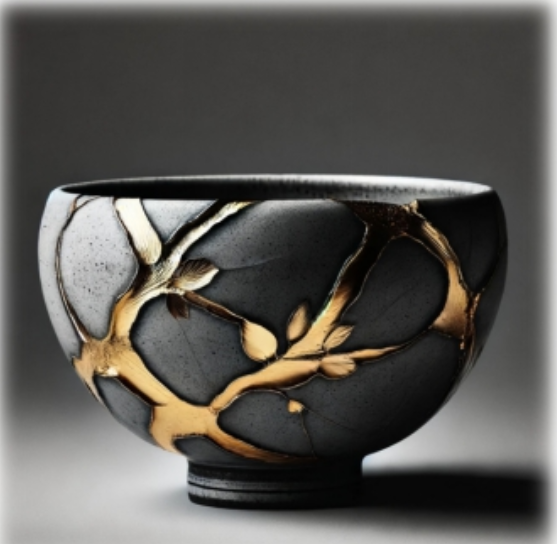
As per the image, we see wabi-sabi in a handmade ceramic bowl with an uneven glaze, the weathered wood of an old house, moss growing on stone, or the changing colors of autumn leaves. It’s about appreciating the authenticity and character that comes with age and use, rather than pursuing flawless perfection.
In a broader sense, wabi-sabi can be a way of looking at life – accepting yourself and your circumstances as they are, finding contentment in simplicity, and recognizing beauty in the transient nature of all things.
“Wabi-Sabi for Artists, Designers, Poets & Philosophers” by Leonard Koren – This is probably the most influential and accessible introduction to the concept. Koren distills wabi-sabi into its essential elements and explores how it can be applied to creative work. It’s a slim, beautifully designed book that’s become something of a classic.
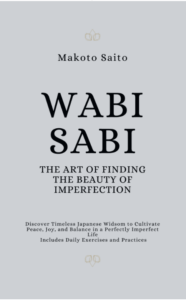
Makoto Saito has written “Wabi Sabi – The Art of Finding the Beauty of Imperfection: Discover Timeless Japanese Wisdom to Cultivate Peace, Joy, and Balance in a Perfectly Imperfect Life.”
The book includes daily exercises and practices to help readers integrate wabi-sabi principles into their lives. Makoto Saito is described as an author and scholar from Takayama, Japan, dedicated to exploring Japanese philosophies like Ikigai, Kaizen, and Hansei, with a background in psychology and philosophy from the University of Tokyo.
The book covers topics like understanding wabi-sabi’s origins and principles, practical exercises for daily life, evening rituals, techniques for cultivating inner peace, and strategies for simplifying and decluttering.
Saito has also written an earlier, shorter book titled “Wabi Sabi: How to Improve Your Life by Applying the Life-Changing Japanese Art of Imperfection,” which is about 66 pages and was independently published.
Interesting, sir. Regards
Rajiv Malhotra’s “Sanskrit Non-Translatables: The Importance of Sanskritizing English” co-authored with Satyanarayana Dasa discusses how many core concepts from Sanskrit and Hindu culture lose their original, profound meaning when translated into dumb English equivalents.