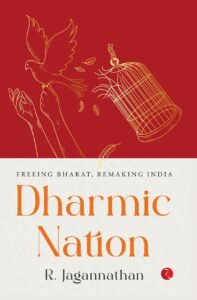
Book Review : Dharmic Nation : Freeing Bharat, Remaking India by R. JAGANNATHAN

The book is on the issue of decolonization. It is very well written and touches all contemporary issues on nationhood, politics, religion and culture.

It systematically demolishes the myths propagated for decades , by the left liberals ; Desi and global.


R Jagannathan is a convertee from Secular to Dharmic : not because he is a bigot or was a bigot , but because the word secularism, a word coined by the West, totally loses the original meaning when applied to India. Secularism in India has become nothing but a tool for Anti Hindu propaganda. Swarajya , the Magazine he is the Editor of, stands for Right Liberalism.

When I started highlighting paragraphs while reading, soon I found that I was stopping at every other paragraph to do so. I have expressed some of these ideas in my own blog and it’s no wonder I tend to agree with these.

My own blog post on the Indian brand of Secularism written about 5 years ago

The book is organized into clear comaprtments , in xxx chapters:-

1 A Unique Pluralist Idea under Attack
2 Are Hindu Rashtra and Hindutva Narrow Concepts?
3 Savarkar Got It More or Less Right
4 Our Constitution Written in the Wrong Language
5 Freedom of Religion—or What Passes for It
6 Defining Hindutva
7 Varna–Jati and the Complex System We Inherited
8 Why Hinduism Must Become a Missionary Religion
9 The Demographic Challenge Hindus Face
10 Love Jihad and Other Issues
11 Creating a Hindu Ecosystem for Conversion
12 The Case for Hinduism Lite
13 How the System Works against Hindu Interests
14 Ram Janmabhoomi, Kashi, Mathura and Deity Rights
15 Small Gains, Big Challenges in ‘Free Temples’ Movement
16 The Roadblocks to Equal Rights for Hindus
17 A Return to Dharma for All Indians

Shall touch upon some of these chapters. Wherever I quote from the book verbatim , I have used red italics.

About Secularism and Pluralism

Secularism makes no sense in Bharat as no Indic Ruler  ever persecuted followers of other faiths nor interfered with governance , till Abrahamic religions came into the scene.  What we see in Bharat  is ‘Pluralism’ that has evolved over millenniums of  liberal thinking.  It is this pluralism that is under attack today by the left liberals. Typically it is the western idea of a nation that lays down acceptable standards for food, clothing, language, thinking and almost every aspect of life style.

Plurality is inherent in Vedic civilization,while the western concept of a nation cannot absorb the phenomenon of multiple languages , food, culture, faith etc.

India’s sense of nationhood is civilizational in character rather than a Renan equivalent of the nation-state.

The same idea found resonance in Eck’s book, India: A Sacred Geography, where she notes that India is a ‘land linked not by the power of kings and governments, but by the footsteps of pilgrims’.

There is a lot of reference to Veer Savarkar one of the clearest thinkers, a great patriot and unfortunately the most misunderstood Indian. Veer Savarkar was a freedom fighter who spent his formative years from college days on actively fighting the British . His days at India House, London and his daring escape from British custody must have placed him at par or at a higher pedestal compared to Bhagat Singh and Subhash Chandra Bose. But his ideas and contributions to language , literature, culture, social reforms have been systematically underplayed and he has been vilified by our left-liberals, and christo-islam lobby. Why ? because he worked for Hindu Unity and questioned the conversion activities of Abrahamic faiths; it did not matter that he himself was a rationalist rather than a practising Hindu.

But the time has come for every Bhartiya to realise the greatness of our Pitrubhumi or Punyabhumi as Veer Sarvarkar refered to Bharat. (akhand Bharat).

Savarkar’s Hindutva was not about the religion, for sure, but it was about protecting Hinduism for those who want to practise it any which way they want.

Colonialism, apart from the physical, social and economic indignities it heaped on the conquered, did more harm by capturing the minds of the colonized.

Thanks to two different colonizations of Bharat over the last 1,000 and odd years, one being Islam and the other British (including their Christian faith), we have internalized all their critiques about us. We—essentially the elite—have grown to believe that Hinduism is mostly backward and possibly evil, that we are fools to worship ‘idols’, or even monkeys, snakes and trees, that we are nothing but caste, caste, caste, which again is purely a system of oppression, that western ideals represent the new, inclusive universalism that all modern peoples must embrace (liberty, equality and fraternity), and even that India is neither a country nor a civilization. It is just a collection of odds and ends in terms of religious and other things that define a people as one.

Yuval harari ,in his book history of mankind expresses similar sentiments; colonization of minds ensure that the colonized people indulge in self flagellation long after the colmoisers have left their shores.

Christian universalism and the determination to convert all people to believe in the ‘one true god’ destroyed Hellenism in the ancient world, and African cultures in the modern world.

Our elites have been taught to look at every issue through Abrahamic lens be it the idea of nationhood or be it a practice followed in a temple like Sabarimalai.  We are trapped by the Europeans Centric idea of universalism as understood (or misunderstood) by the West.

The author uses very strong words comparing the Abrahamic faiths to multinational corporations or imperialism.

About Freedom of religion

In the Abrahamic tradition, God is bottled or stagnant water, not the fresh and clean stream that quenches our thirst and keeps moving along continuously. Freedom of religion is about an individual’s right to make choices, not about the right of large and powerful religious multinationals seeking to hack the human mind and impose their own agendas.

The author  has previously written for or edited publications such as The Financial Express,[5] Business Standard,[6] Daily News and AnalysisThe Times of India and BusinessWorld

His business sense compares the abrahamic religions to multinationals going after profits; read numbers.

When Coca-Cola and Pepsi battle it out, it is the smaller players that are squeezed out since market share for the big two can be grown only by focussing on winning converts from the smaller players. India and China are the biggest markets for growth of Product Bible and Product Koran. China is a closed market, and growth can happen only surreptitiously, and that leaves only India as the biggest market worth exploiting.

If they are not merchandise , why market it aggressively ? Today in Tamilnadu and Andra Pradesh, there are full time preachers whose only job is to harvest souls. Who pays them ? and why ?

He also highlights the nature of indic thoughts that, so much threatens the West that they have studies on ” Dismantling hindutva / Hinduism) “

This synthesis is what we call dharmic, even Hindu, a culture of diversity and accepted difference that goes beyond tolerance, and whose definition transcends the conventional meaning of ‘religion’. It is a civilization whose core tenets are blurry, but the broad contours are clear: it is about each one finding their own path to higher truths, to elevated spiritual realms, or even discarding the idea of God or religion and instead opting for a code of ethical conduct that transcends religion (as in Buddhism, for example).

On Ideas lost in Translation

if one accepts the idea of Bharat, how is it that words and expressions unique to our civilizational identities find no space, when French Revolution terms like ‘liberty’, ‘equality’ and ‘fraternity’ do? Why are words like ‘dharma’ (upholding a cosmic order), ‘ahimsa’ (non-violence), artha (wealth), nyaya (justice), satya (truth), moksha (freedom from rebirth), antyodaya (serving the poorest man), sampradaya (broadly denomination), ‘varna’ and ‘jati’ missing?

Sai Jai Deepak in his book India that is Bharat elaborates how many concepts pertaining to Bharat have simple been lost in translation.

You may translate religion as dharma ..but dharma cannot be translated to religion. Dharma is much more than what  a western mind understands by religion. So are words like Varna , ashrama, aparigraha nyaya , sampradaya, shastra.

On Hindutva

The author goes to great lengths to explain what hindutva is and more importantly what it is not.

Hindutva is about protecting the global minority communities rather than about threatening any local minorities.

Gandhi did not have to become George in order to draw inspiration from Sermon on the Mount; but then abrahamic religions need headcount ; they need to convert people from other faiths. While Gandhi could sing about jesus or Allah while he remained a Hindu, he could not dream of Ram or Krishna after conversion to any of these abrahamic faiths. There in lies the danger.

The author argues for Hinduism to become a missionary religion; after all it has something for all. For the educated elite in Developed countries ,it has meditation, yoga and Advaita.  For the masses you have movements focussed on Bhakti like ISKCON.

The last chapter suggests some steps for the way ahead.

Hindusim or the Vedic Civilization has place for all and can accomodate all. But In Bharat, exclusivity in matters of faith and belief do not add up to ‘freedom of religion’. It is about a bifurcation of humanity into ‘us and them’.

Words like ‘kafir’ , ‘pagans’ or ‘heathen’ should be banned or outlawed just as calling Dalits by their caste names is legally treated as abuse. There cannot be any ‘us’ vs ‘them’ . 

Ambedkar exhorted the SCs to ‘educate, agitate, organize’ to claim their rightful place in India and elsewhere. This is what Hindus must do over the current and next generation or two, to achieve equality in a world loaded against them in every way.

Both Christianity and Islam are conceived as ever-expanding faiths, with the ultimate goal being to bring all humans under one universal faith (their own). This is nothing but imperialism in matters of faith, even though cultural pluralism exists in almost all faiths.

The author concludes with the ancient aphorism

Dharmo Rakshati Rakshitah.

Dharmo Rakshati Rakshitah. Dharma protects those who protect India’s dharmic nationhood. The countdown for India’s dharma-based Second Republic has begun.

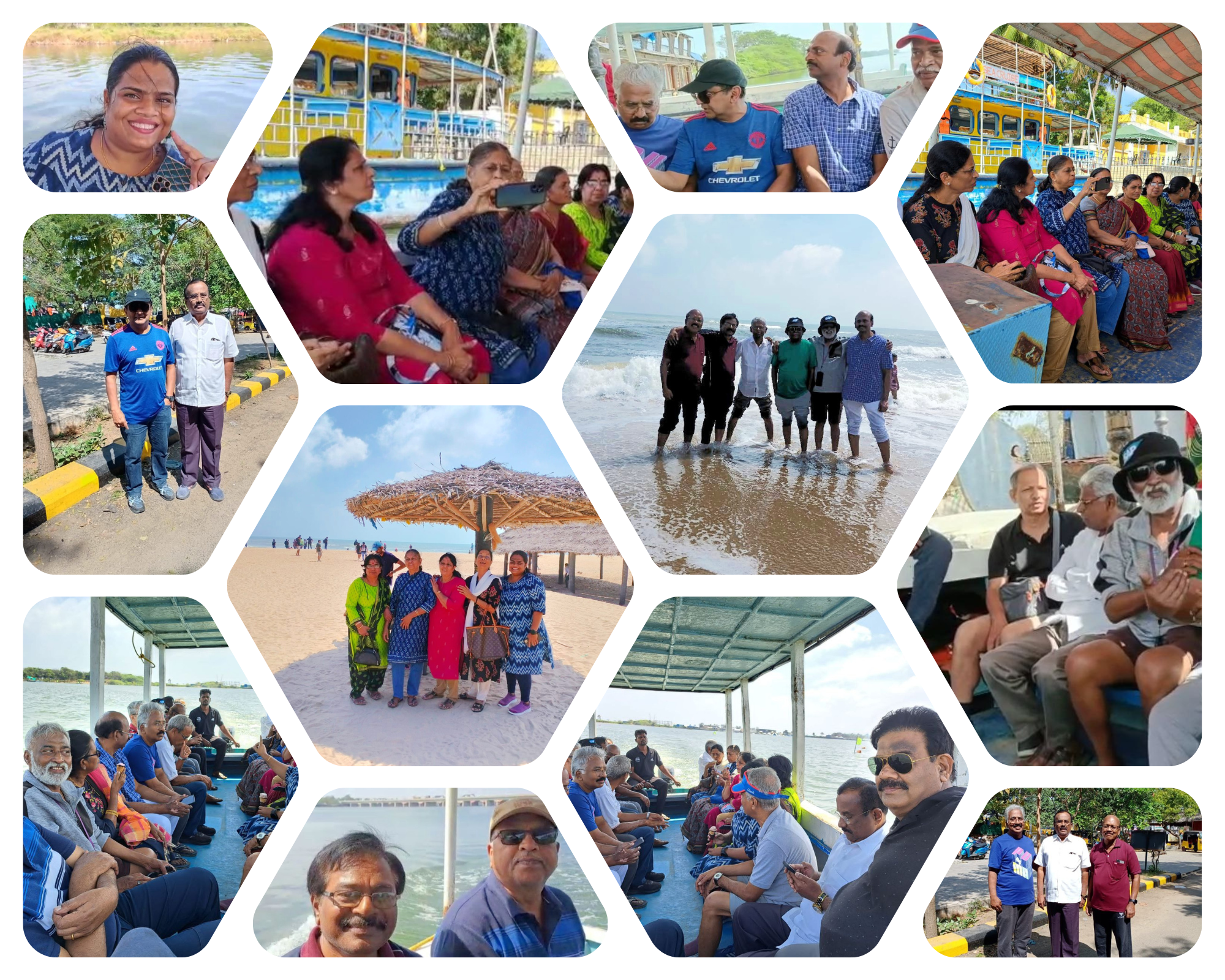
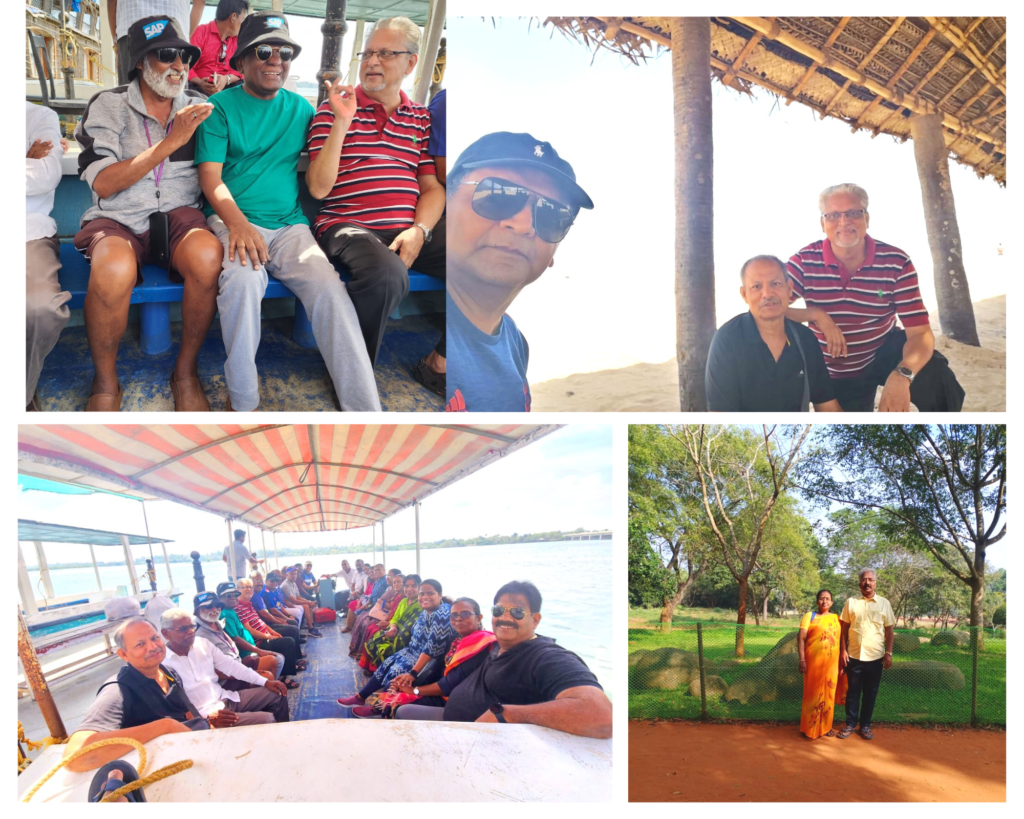
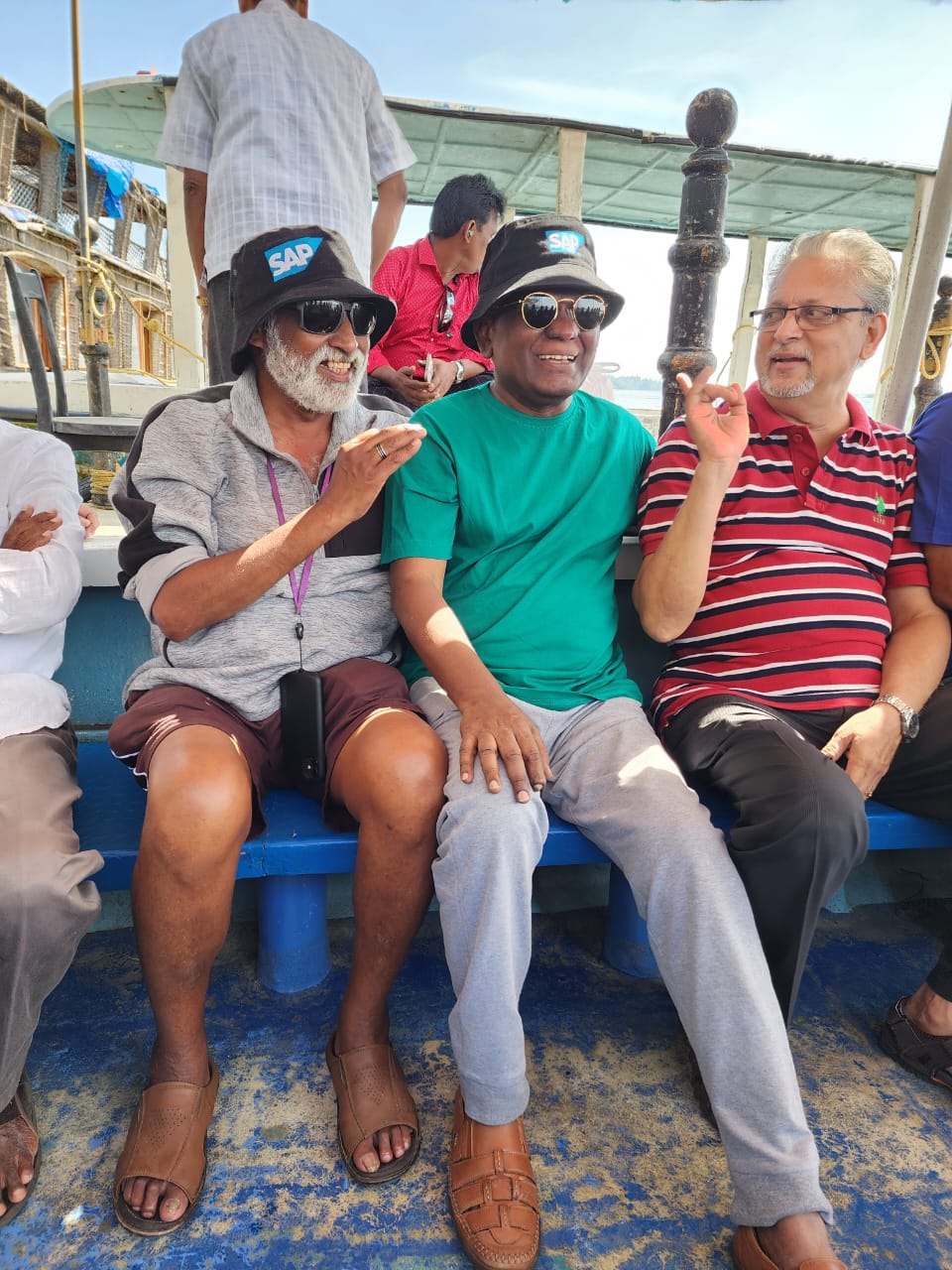
Pondicherry Trip 5 – Boating

At Chunnambar Boat House

Why should boys have all the fun !

Some of us had planned to head back home by afternoon and so boating had been organized in the morning . A big thanks to Jayakumar for doing all the legwork and arranging.

Boat ride was fun .. a continuation of

‘அதோ அந்த பறவை போல வாழ வேண்டும் ‘

In addition to the photos, I am also posting some videos.

The Videos

loading videos
Loading Videos...

The last lot to leave on the 6th morning.

A huge  round of applause to Gnana, Gajan, Jayakumar , Satya and everyone who made this trip a memorable one.

Hoping to meet you all again at Palakkad on 27 Aug !


Pondichery Trip – part 4


We left the flaming dragons quite late at night or may be early in the morning with a strong hangover of some spirited dancing .


But some of us were keen for a morning walk along the  famous promenade beach.


Satya was busy doing a  brisk walk completing his 10,000 steps , 4 Km or whatever, while OV, Venkatesh and I had a leisurely stroll along the promenade taking time for selfies.


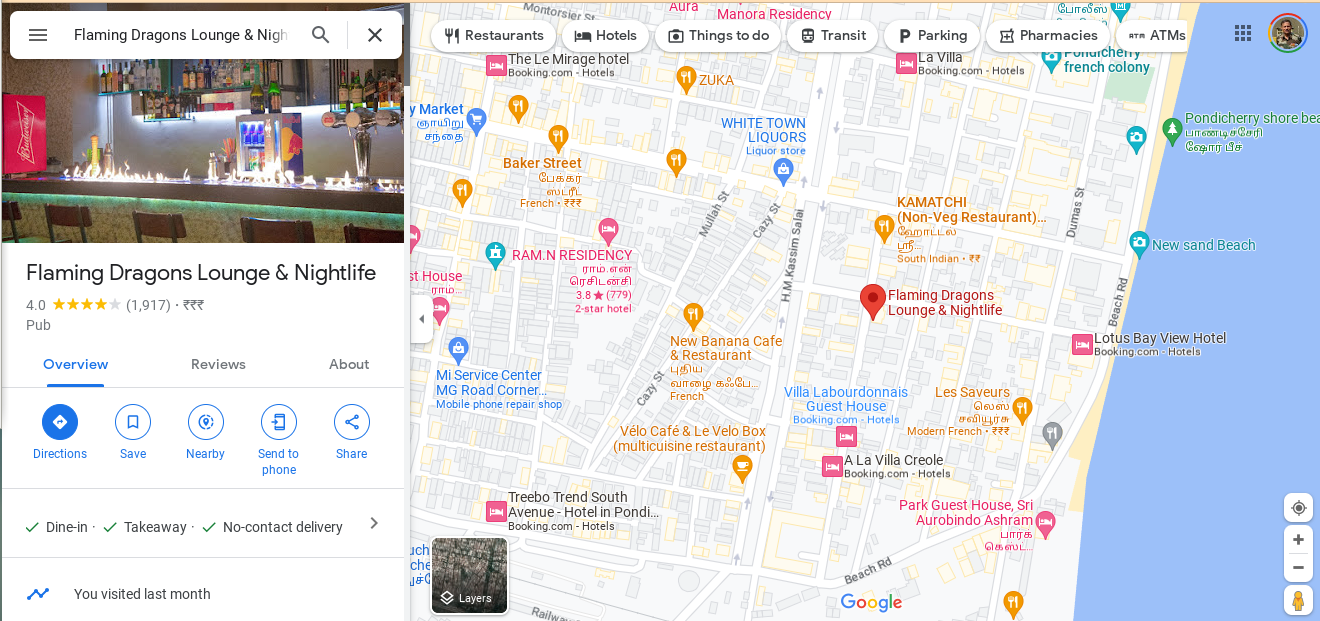
Pondicherry – 3 Flaming Dragons

Flaming dragons was a surprise event for most of us.

Later I learnt from Gnana that it was in their plans to include a visit to the youngsters dream place to shake a leg after dinner!

The original plan was was limited to 3-4 guys and when the ‘boys’ started piling into the cars, the number was almost ten . I for one had decided to give it a miss on Saturday as we , in any case were going there on Sunday.

So we proceeded with Gnana leading the way on a scooter with me on the pillion and the cars following.

I will never be able to say if it was right on our part to have accepted the generous offer from Gajan and Gnana for a free entry to a place where other  revellers had to pay an entry fee of Rs 2000/ or so.

It was a kind of gate crash into a party and we all trooped in . Baburaj and Ilango straight away got into the dance floor and others followed.

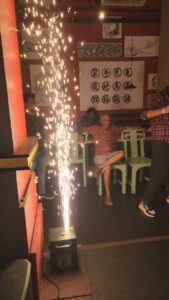
Satya by the Sparkler

There were only 20 plus and 60 plus dancers and nothing in between. Seeing the mood of Ashokarajan , one could have grouped him with the 20 plus. It was absolutely a feeling of shedding of the years at least temporarily . For some reason our ladies didn’t seem to share the spirit of adventure or may be ‘boys’ never grow up. Only Divya, the young lady was there enjoying the beats .

Whatever, it was an experience of a lifetime and even those who didn’t hit the dance floor were mentally there.

For me it was a proof that you don’t need spirit inside you to bring out the spirit ! Energy was flowing freely , so visible and so was the spirit of camaraderie. A great event to remember for ever !

Here are some videos

loading videos
Loading Videos...


Pondycherry trip – 2

Contd from Part -1

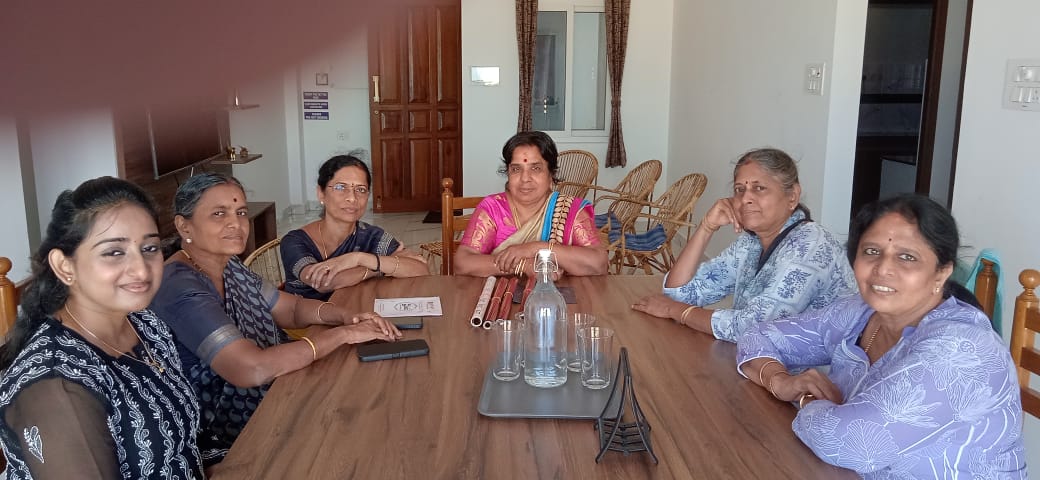
Lunch at Jairam was marked by photo session by the ladies..the lionesses and the lion…

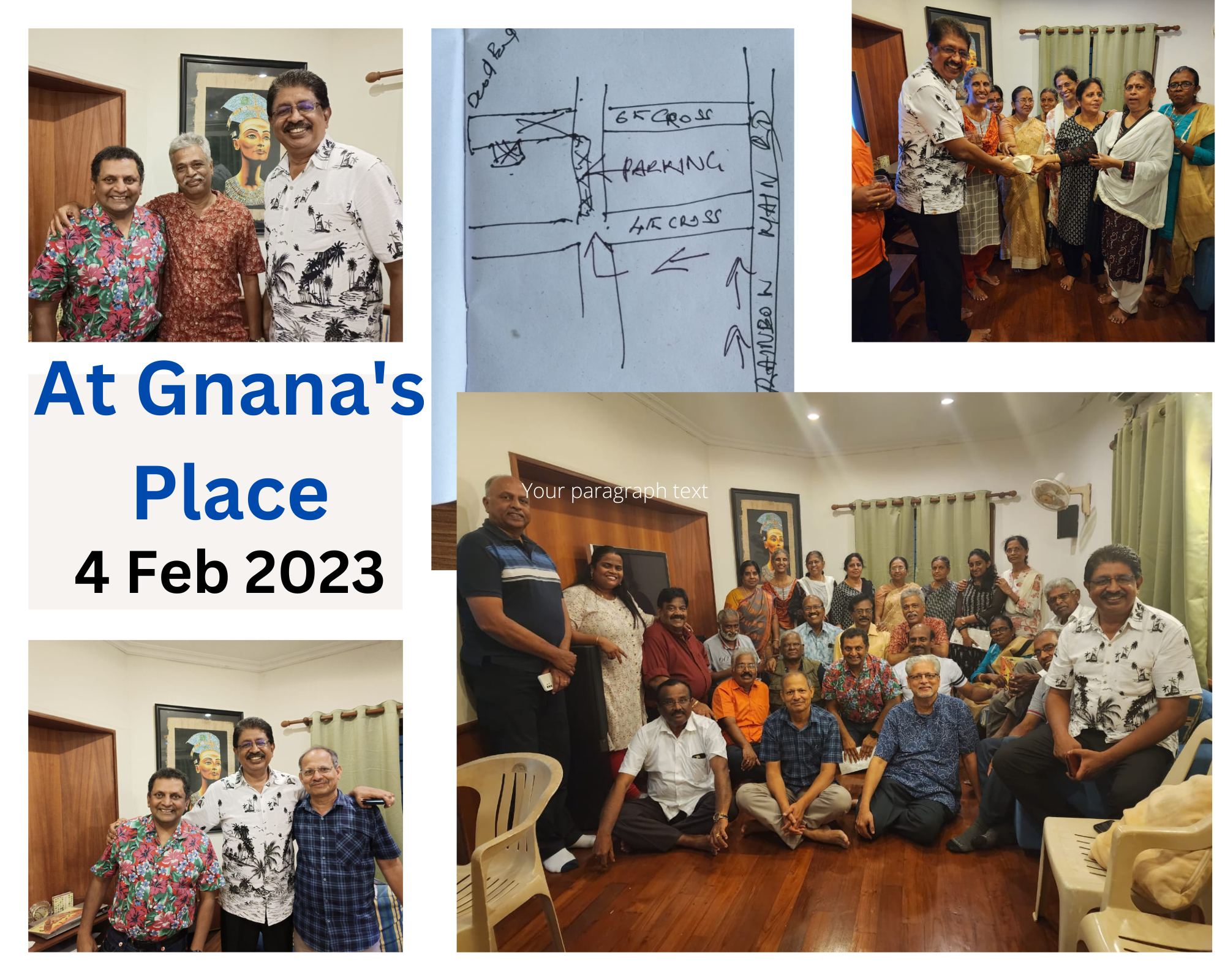
The evening of 04 Feb , indisputably was the high point of the trip.

Scene shifts to 6th cross road , rainbow nagar. To the den


Gnana who had been keeping a low profile during the earlier proposals for a Pondy trip , came into his own this time to be fully involved along with Jayakumar. Sathya chipped in with his planning, announcements and cash management.
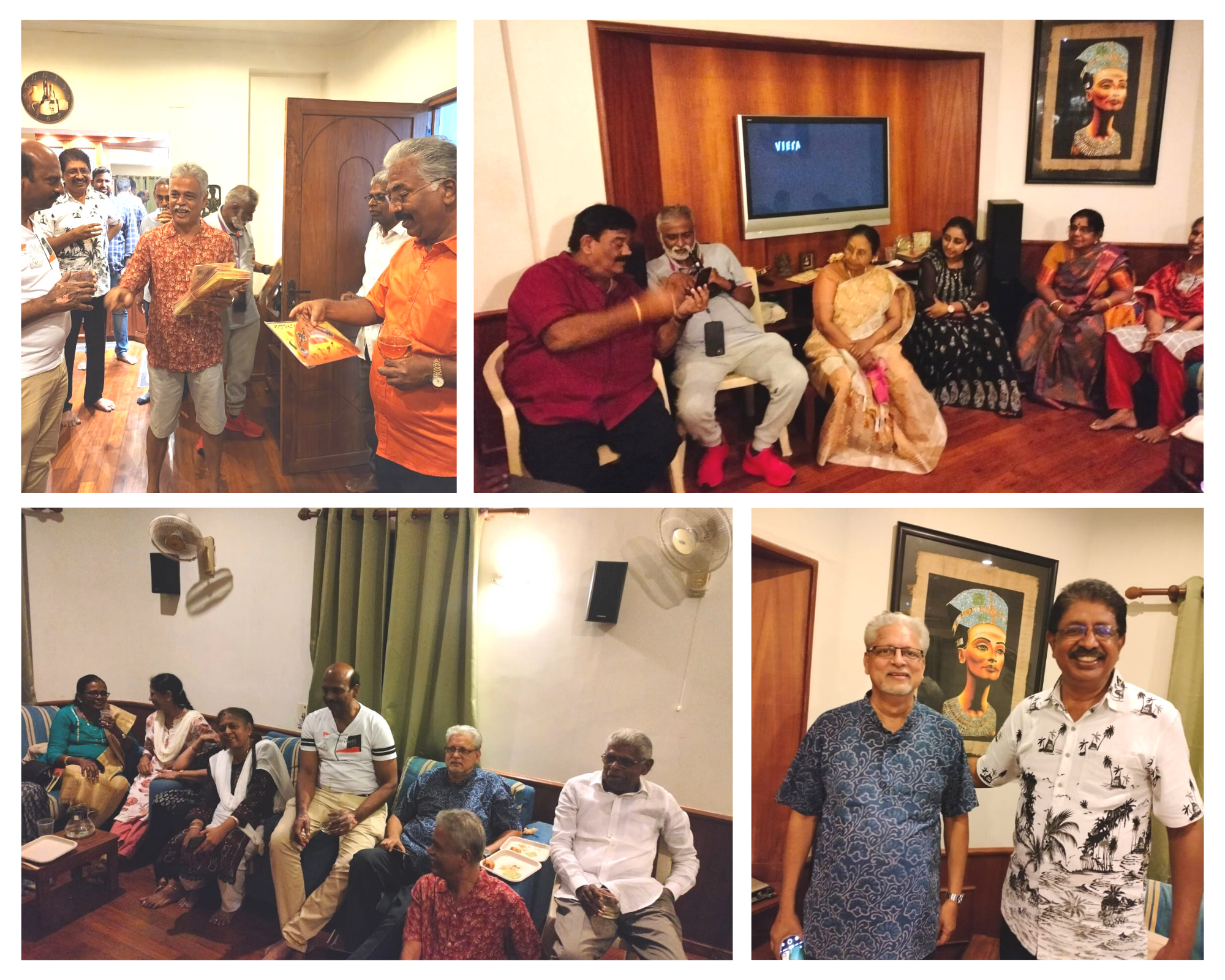
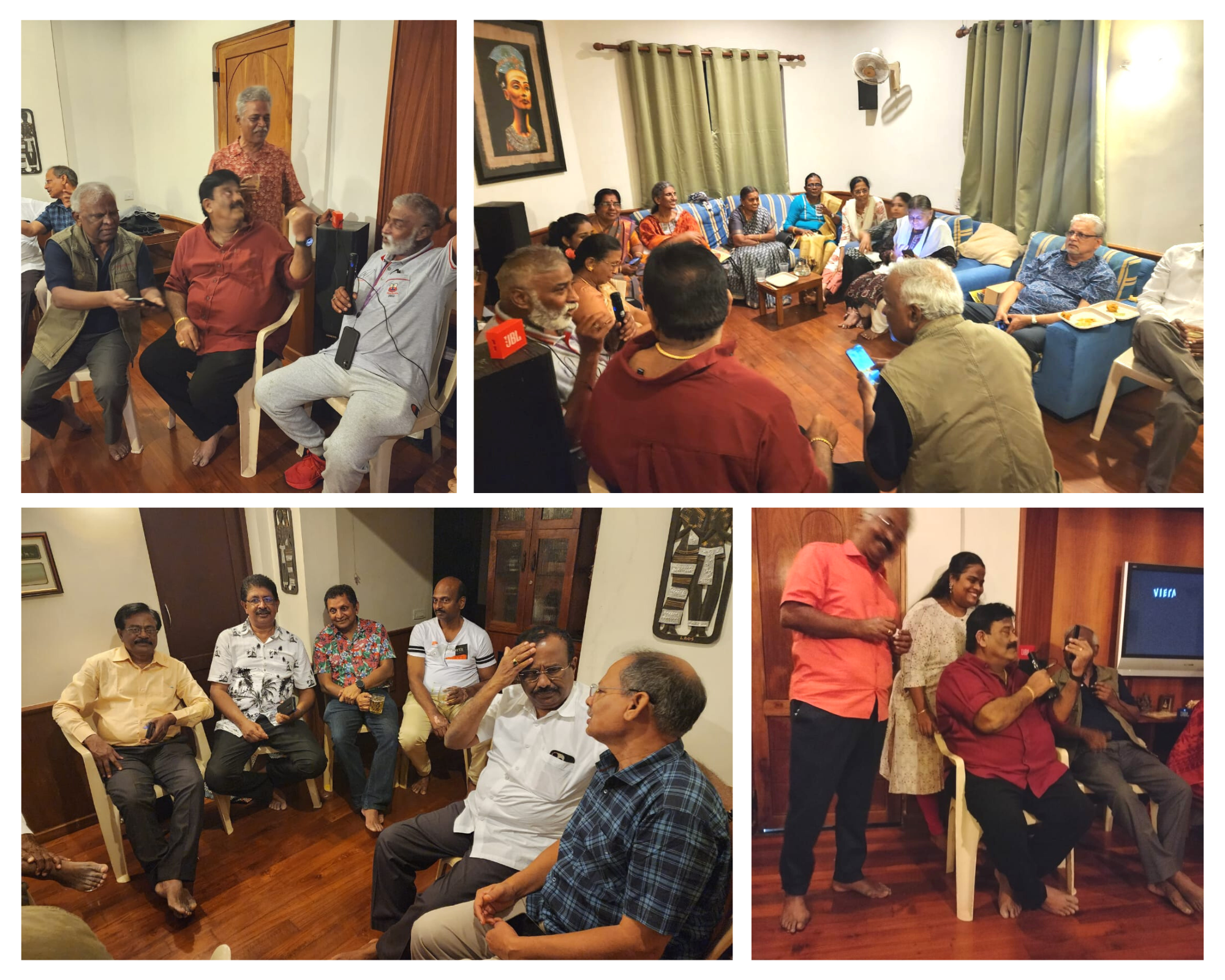
Gnana’s house at Pondy, which had been uninhabited for years had to be done up for the event.

Full credits to Kumudini and Gnana for rising to the occasion . The house looked as if it had never been unoccupied.

His dream bar and studio or den , which would be anybody’s dream, was thrown open to the party.

What followed was a nice sing song session interrupted by friendly banterings.

There was good wine , good food and smiles all around, all under the benign gaze of Cleopatra with her pretty nose.

Couldn’t resist this Asterix comic frame!

I have tried to capture the mood in a few collages of images. Pondicherry has always been a spiritual refuge in more than one sense. Spirits were flowing; spirits were soaring !


SS Ilango was the star of the event with the nostalgic numbers that took you back by half a century… Are we that old really ?!

Venkat who never sang in the school never stopped singing that evening; he was well supported by Sandhya. Asokarajan as always was everything, singer , dancer and the stand up comedian though seated most of the time.

Venkateswaran , another prolific contributor to Smule  was sorely missed.

There followed a lively bout of anthakshari .. what would be the Tamil word for that ! May be ORA the professional translator can help!

There were many videos , but I am posting one which I feel aptly captures the mood; the lyrics are apt ..

Atho antha paravai Pola vaazha vendum…

Birds are what they are; Free and light-hearted, chirping away all the time.


Could hear Bharathiyaar’s

விட்டு விடுதலை யாகிநிற் பாயிந்தச்
சிட்டுக் குருவியைப் போலே

After dinner there was this unplanned move to the flaming dragons.. unplanned for most of us.

About that in the next post..


Pondicherry Trip Feb 2023 – Opening Post


This is how ‘Senagers in Action’ would be.

For the uninitiated ; a senager is a sixty-plus behaving like a teenager…

Senagers get particularly younger and light-hearted when grouped with the species of the same kind and when you meet up with classmates from a boarding school, it is the ultimate.

Having said that , this meeting at Pondicherry was very special for various other reasons; being the first post COVID get-together and coinciding with visits from long last buddies from UK and Australia.

After a couple of hiccups over two years to various reasons , the event when it did fruitify hit the perfect sweet spot over the two days spent at the coastal town.

The idea is not to write an essay on how you spent your vacations, but to capture the moments through videos , photographs and the text messages exchanged in the period by the participants themselves.

It’s an attempt to organize the various videos and photographs clicked by the revellers and to record the final impression as posted on WhatsApp.

It wouldn’t be fair to single out anyone for the success of the endeavour; and at the same time the organizers on ground, Gnanaprakasam, Jayakumar and Sathya do deserve a special mention .

What has been left out may please be added through comments .

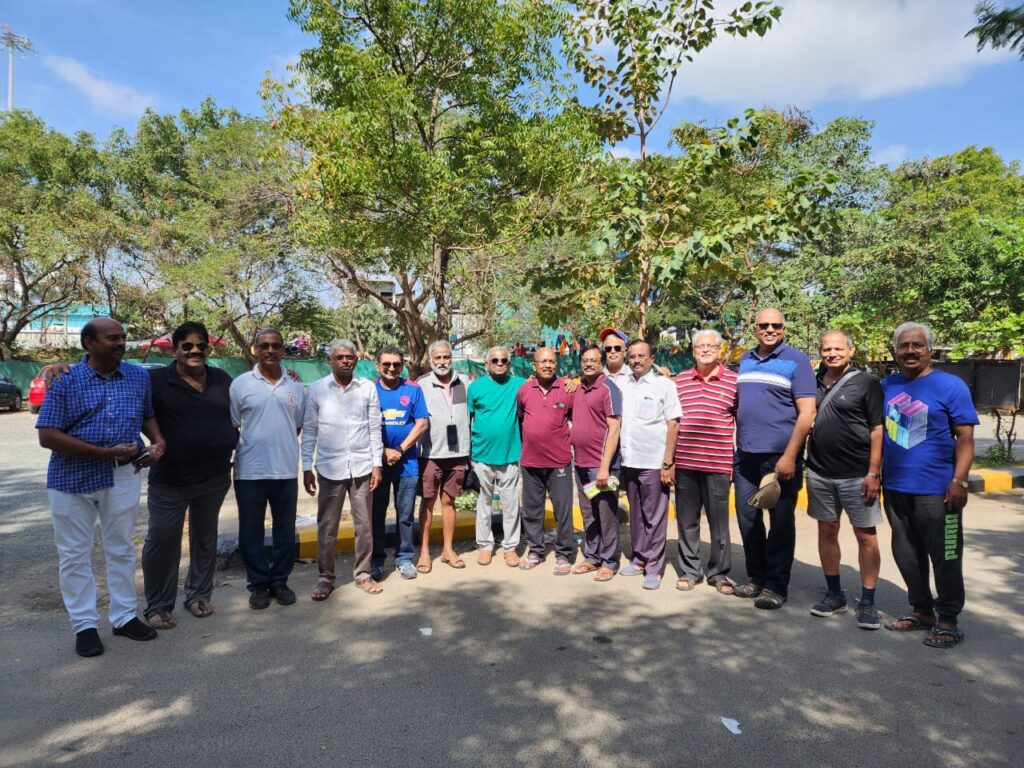
That’s the reception Committee on 4th feb at Jeno Ramki Apartments Pondicherry.

…….And the first group photo on arrival….

At Apartment 4A Jeno Ramki , On arrival 4th Feb 2023

To be continued ….

The Story of Veshti or Veshti Puranam

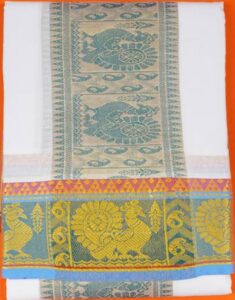
Veshti (வேஷ்டி) is  a  humble piece of cloth that was worn by kings and commoners for centuries in Tamilnadu. Now only a small group of boomers and some politicians from Southern India are keeping the flag flying high ( or is it flying low ?)

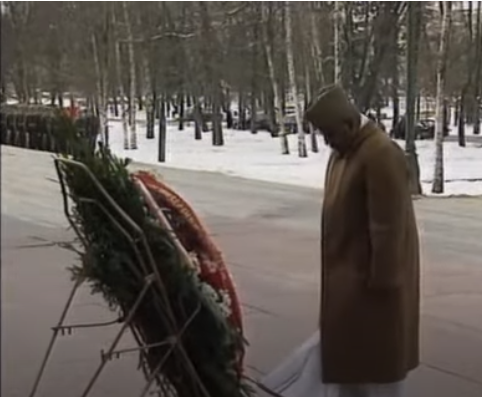
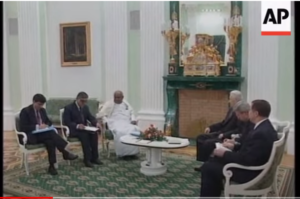
Prime Minister Deve Gowda at Moscow 1997 at a wreath laying ceremony . It was a cold windy day ; a solemn occasion and the only sounds heard were the sounds of fluttering of the flags and the Indian PM’s Veshti.  (Quoting from a newspaper report 🙂  )  Photo : Courtesy AP.

Here we go

Firstly it is not veshti but vetti as it is called in Tamil. The cloth was woven as long pieces and then cut into pieces as required by people as per their needs . Vetti in Tamil means ‘ to cut’.

The Sanskrit lovers made it Veshti to make it sound sanskritised!

It is a simple white piece of cloth in cotton or silk worn by men , and in earlier times this was the only attire for men of all ages , all classes.

Though it’s worn as a wrap-around skirt style to cover the lower part of the body, it is actually a multipurpose cloth.

It can be a headgear or a waist band ; can be worn like a poncho to protect from cold or mosquitoes (Southern India enjoys a hot winter  and a hotter summer)

It is folded half mast to be worn like  a pair of shorts; oh, not a pair really.  With a little ingenuity, it is tied dhoti style to be a pair of trousers, shorts or something in between.

There are no buttons , pins, velcros or even knots to hold the garment  in place ; so how does it stay there ?

Easy does it.  While wrapping it around just suck in your waist and gently roll down the edge. There you are , it’s your breath that holds it in place to cover your modesty ! Hold your breath for a second and the breath holds the veshti for the whole day! Sounds nice !

A simple  search on you tube  would throw up visuals of the breath control involved in getting the garment in place .

Whatever, accidents or wardrobe malfunctions as they are called today do happen and a hand is always poised to stop the costume from slipping away. These days you have nice velcro belts with big brand names , available, but a puritan wouldn’t use these kind of crutches .

Wouldn’t it be boring to wear just white all day , all year around and where is creativity ?

Not really, veshtis have borders narrow or broad; that’s where creativity shows. You may have intricately made motifs on the borders. In ancient days these were made in gold and now it’s all plastic ,but the skill shows.

The border design  is also used to make a political statement. The Dravidian parties have made it a feature to wear their ideology on the veshti borders , not just on their sleeves as an angrez would say. So when a Tamil politician jumps party, he has to change his whole ward robe !

Then you have the color veshtis where each colour indicates the religious inclination; black for Ayyappa, Red for Parashakti etc.

What is really interesting is the Avtar s that a veshti takes after the original purpose is accomplished.  It is white, it is pure cotton and it’s fine. It is ideal for any kind of reuse from bedspread to bandages. The famous puthur traditional bone-setters use yards and yards of this kind of cloth .

Even about 50 years back a Tamil Brahmin housewife would have struggled without these worn out Veshtis. The cloth was white, fine and unstitched. It was used for all purposes like Idli cloth (anything steamed), drying papads in the sun, making jaangri ( imarti or the South Indian cousin of Jelebi).

Thooli for the baby

Outside the kitchen , generally it was used as  hammock for the baby. (thooli as it is called in Tamil )

In short there was more demand for old veshti than for the new ones. There are husbands who keep searching for their veshti all over the place only to find that,  it has become a bedspread or hammock for the baby , too prematurely. God forbid, if the border had rich zari, a clever housewife would exchange it for some utensils at the first opportunity. There was a thriving industry for extraction of gold from veshti zari.

The only item of clothing that a man had to buy was veshti. This could also be gifted during functions as everyone used it and it was not only free-size but multipurpose.

Wish we go back to those times when life was simple.

The ancient Tamil poetess Avvaiyaar said ” உண்பது ஒரு நாழி,  உடுப்பது நான்கு முழம் “; Meaning one can eat  only about a cup of grains for food and four feet of fabric for covering ; but thoughts (desires) are in thousands bringing misery to man.

Man, that’s simplicity!

Are the activists keen to save this Earth listening?

On the lighter side, I can hear the advaitin expounding ” it’s all one , some call it veshti, some call it head gear or a waist band, some may call it idli cloth or hammock ; it’s all the same. The divine weaver weaves his magic cloth ; it’s all Maya !”

Tathastu


Intelligent Investor – Book

The Streetwise Investor: Steering Clear of Investment Traps Pitfalls and Other Dangerous Lures – Charles Fahy .

I came across this book in the Army War College Library about 20 years back when I was not much into investing. Later I tried looking for it , but could never trace it; and on Amazon, it cost over Rs 2700/-, a book of about 200 pages.

Recently , going through some old diaries , I found some notes that I had then made.

Here’s a  digression right at the beginning; Mhow enjoys the privilege of hosting three great institutions of the Army; and along with it comes the privilege of having  three great libraries, in a radius of about two Kms.

One of the most important aspects of library management is procurement of books; right numbers and  content for the available budget.

These days budget seems to be generous and often there is pressure to expend the amount before the year end. Book vendors are called in Feb and latest books are ordered and sadly, many ‘competition’ books are bought as that’s the phase when people look at books when preparing for some entrance exams. 

Ironically, after gaining entry to an educational institution, reading stops.

In the earlier days , there was more time and less money ; so, procurements  were well considered. Some of the best books are in the old libraries in a dusty shelves.

Let’s come back to the book , the streetwise investor.

What I liked about the book was the focus on an investment system rather than any tips and tricks.

He goes on to prove again and again that a human mind is hard wired to lose money. One needs to identify or evolve a system of investing and follow that to accumulate money.

He uses interesting illustrations to show how the Chinese Whisper phenomenon turns a sell call to buy call and how the media amplifies these signals to create irrational spikes.

Obviously, the ideas are tailor-made for the American system, but can be well related to Indian environment; and in any case we have almost moved to the American system in earning , spending and investing habits.

Some pearls  of wisdom:-

1.  Human nature will always tearaway at your investments if you don’t have patience and a good accumulation system.

2.  Remember the difference between investing and speculating.

3. Don’t be greedy.

4. Before investing, make certain all your basic needs are provided for and that you have ‘extra’ capital for your financial program.

5. If you decide not to handle your own portfolio, choose a broker or money manager who uses a low risk, long term accumulation system that offers consistent performance over a five year or a longer period of time.

6. Continue to educate yourself.

Some ground rules

1. Pay down debt. Pay off the 12%, 18% on higher credit card interest. Your money can’t earn that on a guaranteed basis; so pay it off .

2. Save money and build your liquidity by using any possible tax-deferred system such as pension account.

3. Remember the human nature flaw. Don’t give in to greed and impatience . Long term investing will prove to be your most successful ally. Don’t trade the markets unless you are experienced at it. Use a system.

3a. Corallary to the above; when you have bought into what you think is a ‘buy’ market and you are too early, don’t lose your cool.It will recover and go to new highs. If you have bought quality stocks, they will follow the market.

3b.  If you must trade the market,learn to buy in, when it seems scary.

Veer Savarkar

In the last two three years , there have been a number of books authored by Indic writers , not to be mistaken for Indians writing in English. Some people call them right wing, though it doesn’t make much sense to me.

Before going in to Biography of Veer Savarkar by Dr Vikram Sampath ,it is worth going through a brief biodata of the author himself.

Dr Vikram Sampath was raised in Bangalore and completed his schooling at the Sri Aurobindo Memorial School and Bishop Cotton Boys’ School . He was trained in Carnatic Music since the age of five; among his teachers were Jayanthi Kumaresh and Bombay Jayashri. Sampath graduated from BITS Pilani with a degree in Electronics Engineering, and later with a master’s degree in mathematics.

Against the wishes of his professors, who wanted him to pursue a PhD in topology (an avatar of pure mathematics) , he shifted to finance and obtained an MBA in Finance from S. P. Jain Institute of Management and Research. In October 2017, Sampath received a doctorate in ethnomusicology from the School of Music at University of Queensland, Australia.

His first love of music ; and as can be seen from his qualification in Science and Finance, one wonders what motivated him to write about Veer Savarkar , a name that would automatically slot him into Right Wing. A point to note is that his first book was on Wadiyar Dynasty of Mysore, second on Gauhar Jaan who was India’s first classical musician to record on the gramophone and the third was on the life of Veena maestro S. Balachander. The common thread running through all these subjects is the love ‘India that is Bharat’ .

Vinayak Damodar Savarkar or Veer Savarkar is not the kind of household name in our country as Gandhi or Nehru; though it should have been.

Veer Savarkar had founded the Abhinav Bharat , a revolutionary movement in 1904. It was a secret society founded on the lines of Mazzini of Italy towards an armed struggle to win freedom for the country.

He served for 15 years in Andaman and by the time he was interned in Ratnagiri Mahatma Gandhi was already leading the Congress.

Everybody knows , that Indian National Congress was sharply divided into moderates and extremists.

It is the story of moderates  we hear; Gandhi, Nehru , Patel and so on. There were contributions from thousands of others who believed in different paths to liberation of their nation . They were great patriots , no doubt, but their stories were given a quiet burials by their own countrymen, as the British did not approve of their methods.

Among extremists , Lala Lajpat Rai , Bal Gangadhar Tilak and Bipin Chandra Pal of the Lal, Bal and Pal fame are known to some extent. Who all have heard of Madan Lal Dhingra ,VVS Iyer, Vanchinathan, Neelkanta Brahmachari,or Thirumalacharya ?